

Wellbeing Days at Securit Park: building bridges around drivers’ wellbeing
On 28 October 2026, Year 2 of the Wellbeing Campaign, Park Safe, brought the supply chain to one table in La Crèche (Deux-Sèvres), around one common point: the driver.
When: Wednesday 28 October 2026 (Wellbeing Check-Ups on 27 and 28 October)
Where: Securit Park, Place François Quesnay, Centre Routier, 79260 La Crèche (Deux-Sèvres), France. A83 Exit 11, Niort-Est, at the A10 / A83 junction
Organised by: European Wellbeing Initiative (EWellIn), powered by ESPORG
Host: Trucks’nB / Securit Park




Event description
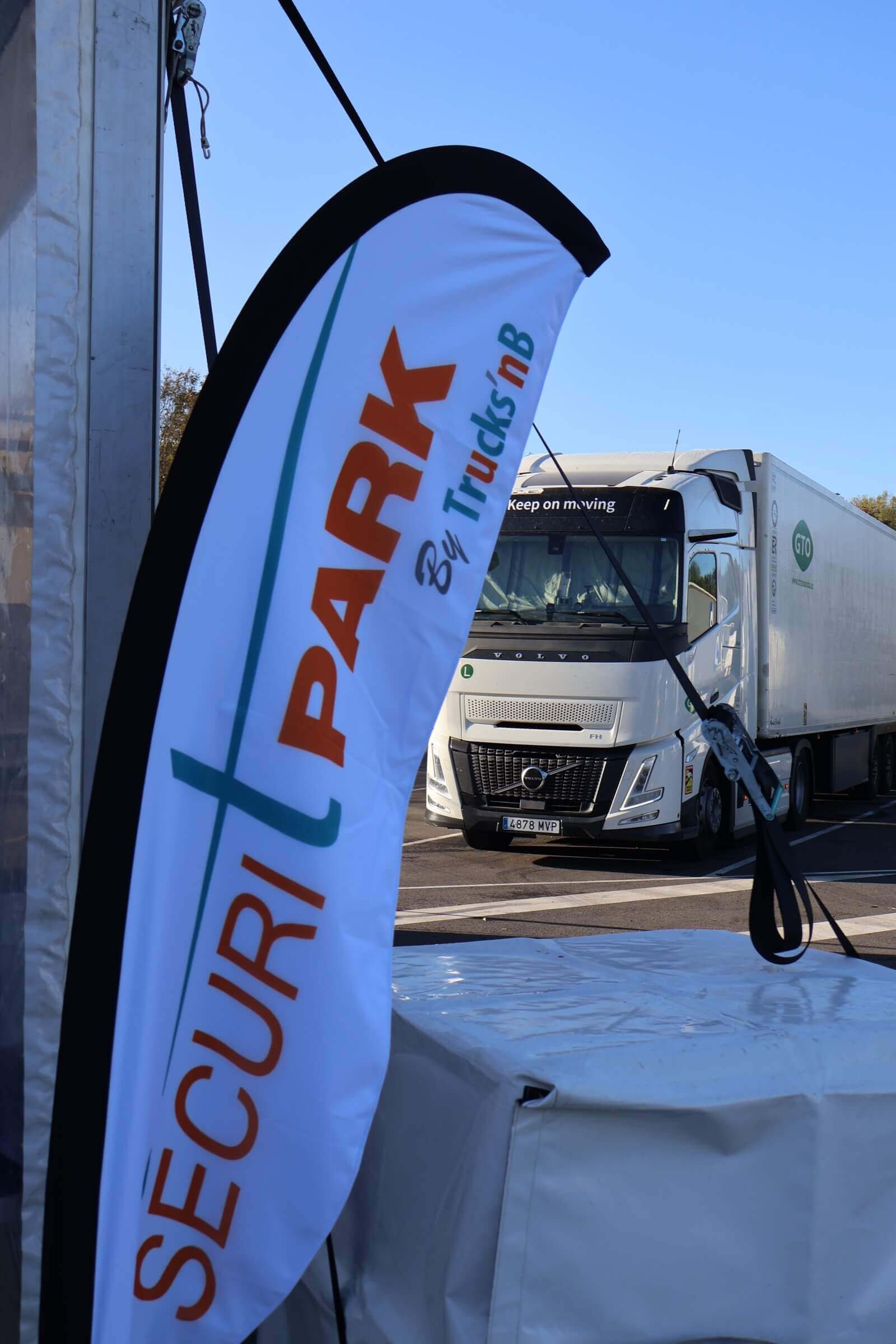
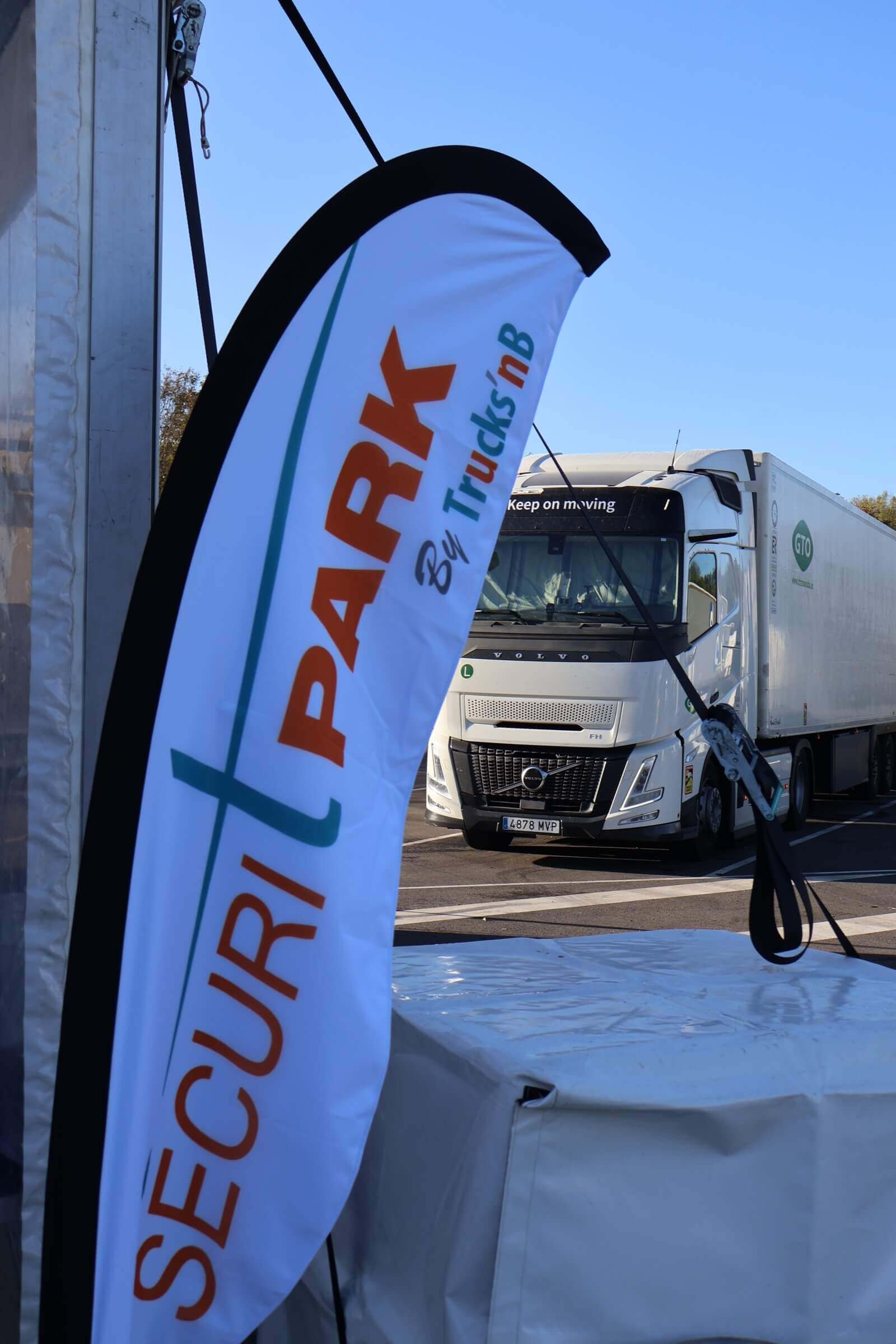
On 28 October 2026, Securit Park in La Crèche, at the A10 / A83 junction, welcomed the Wellbeing Days of the European Wellbeing Initiative (EWellIn), powered by ESPORG, with our host Trucks’nB / Securit Park. Wellbeing Check-Ups ran on 27 and 28 October.
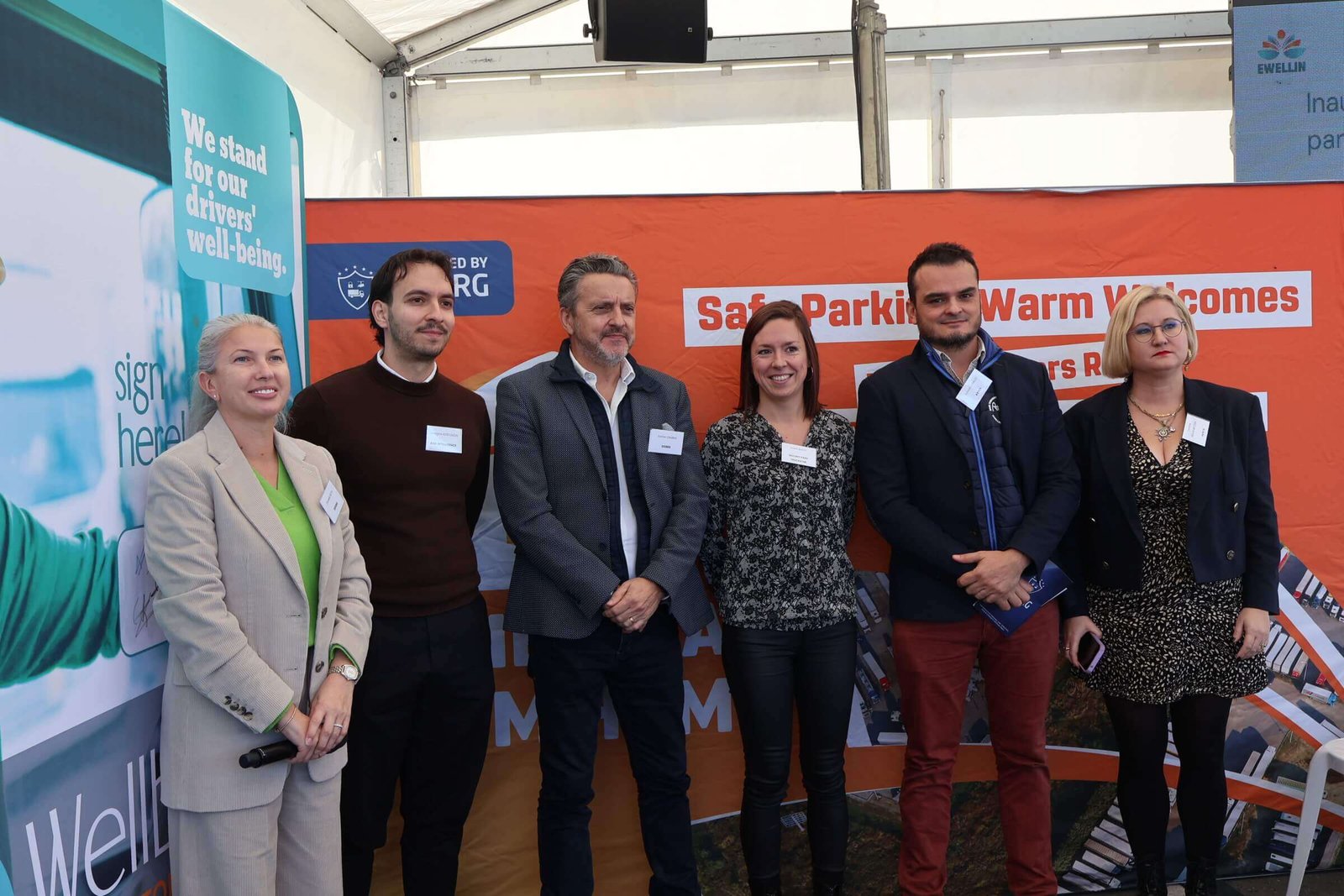
Every Wellbeing Campaign event has one main objective: to build bridges. We create a communication platform where different actors of the supply chain sit at the same table and find their common point, drivers’ wellbeing. In La Crèche, that table joined parking operators, hauliers, a European authority, security analysts and road and digital services.
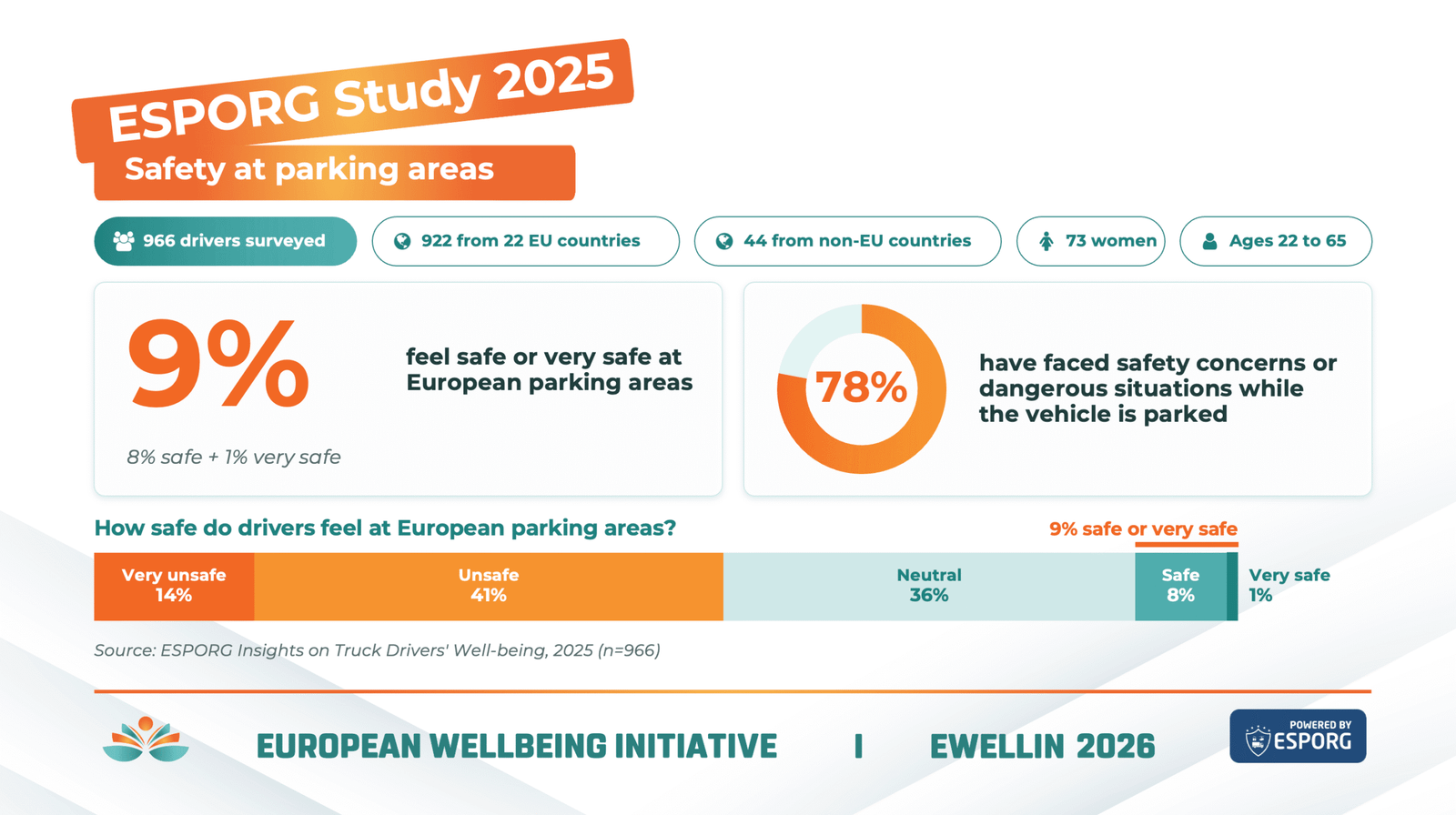
The Wellbeing Days belong to the Wellbeing Campaign “Drive Safe, Park Safe, Work Safe, Live Well”, a four-year journey from March 2025 to 2029. Year 2, Park Safe, looks at how rest areas can support drivers’ wellbeing, in the spirit of a Home Away From Home. Yet safe places to stop are still too few: according to the ESPORG Study 2025, only 9% of drivers feel safe or very safe at European parking areas.
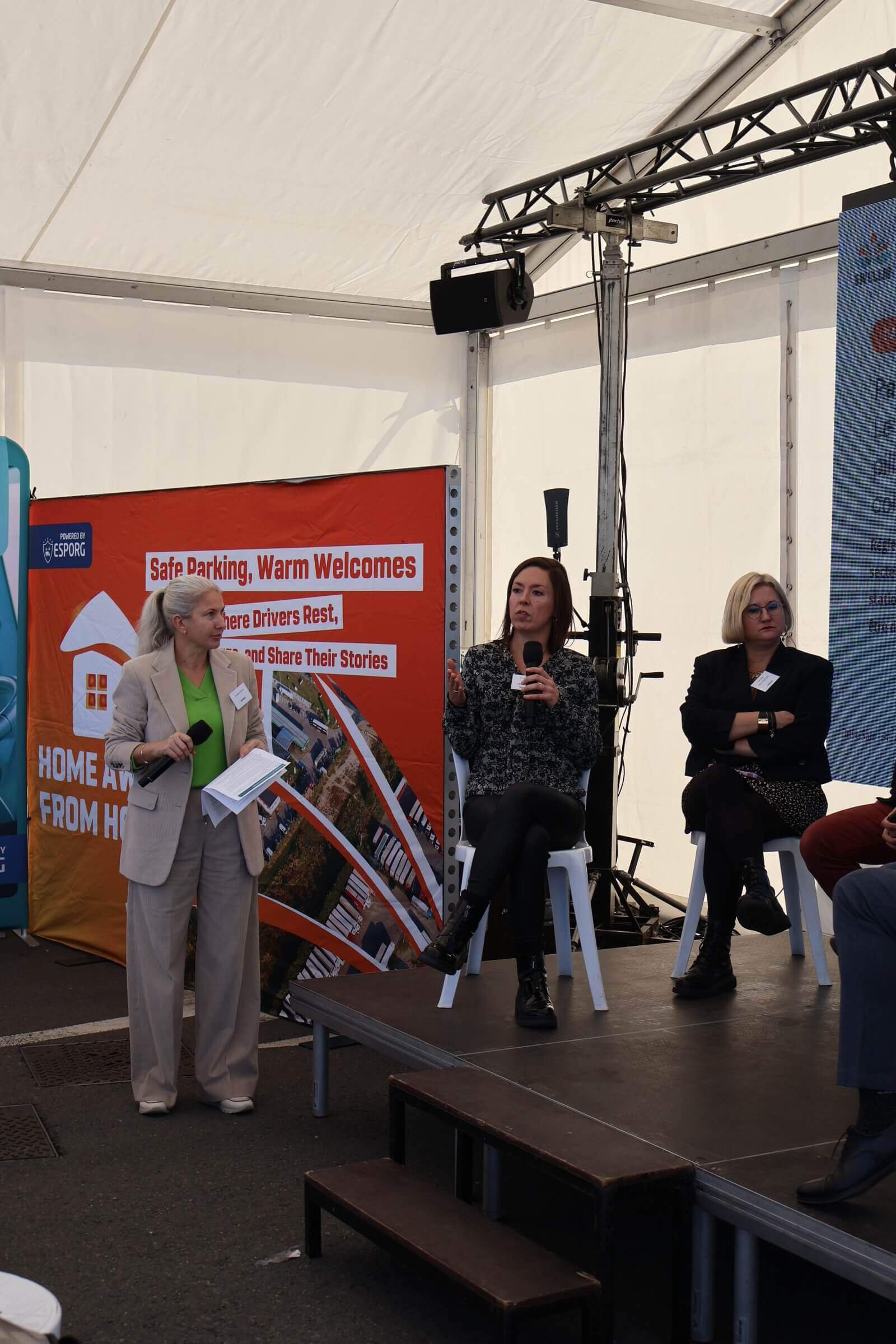
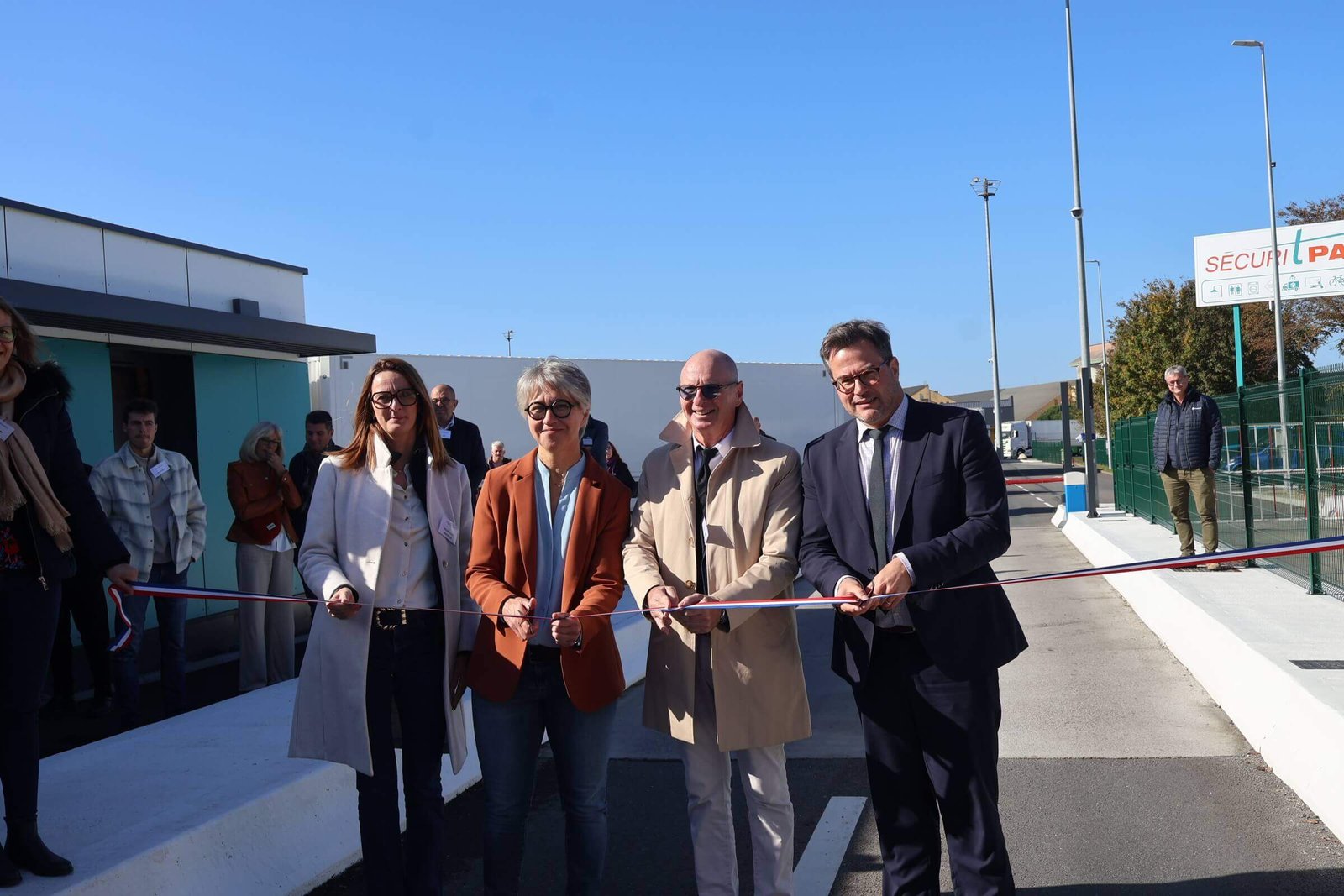
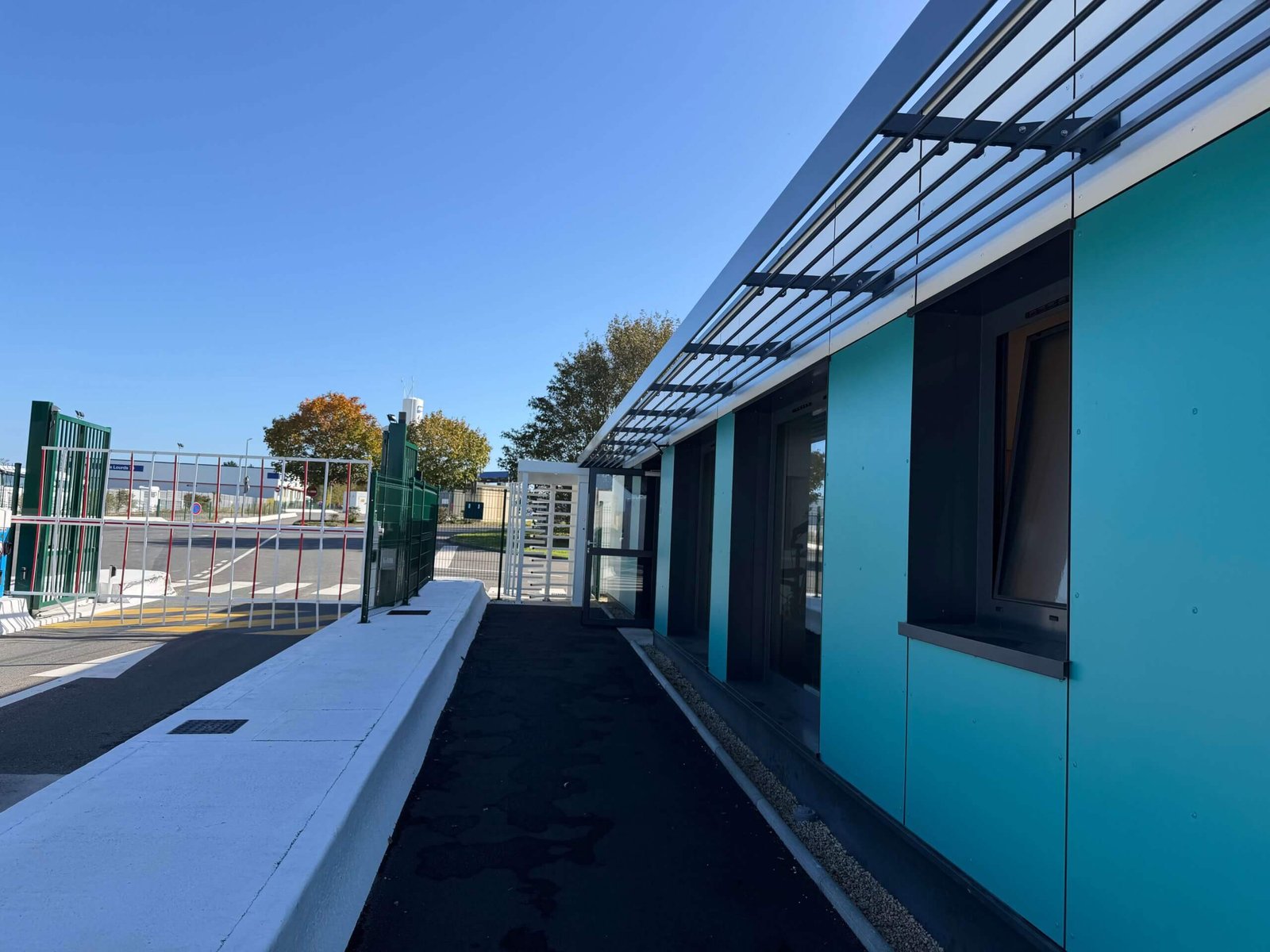
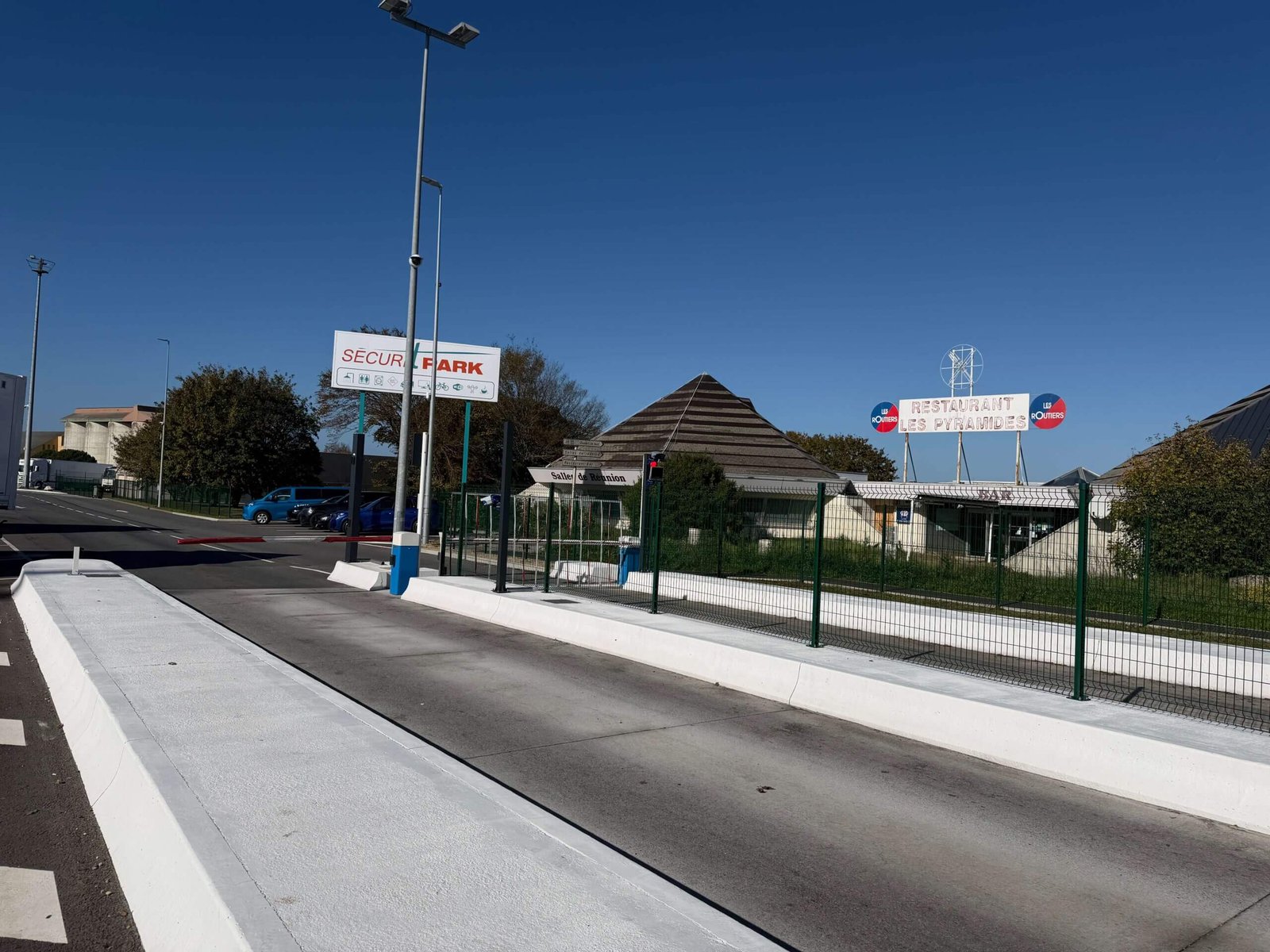
The morning brought welcome speeches, presentations and the roundtable “Safe Roads, Safe Stops, Well Drivers”, on the driver shortage, the lack of safe parking spaces, security while parked and the services that make a stop easier. Securit Park received the Wellbeing Ambassador certificate, partners signed the Wellbeing Pledge, and the secure truck parking was officially inaugurated with the Prefecture of Deux-Sèvres and OTRE Poitou-Charentes / Gironde, followed by a visit of its Freeflow access: no ticket, no waiting.
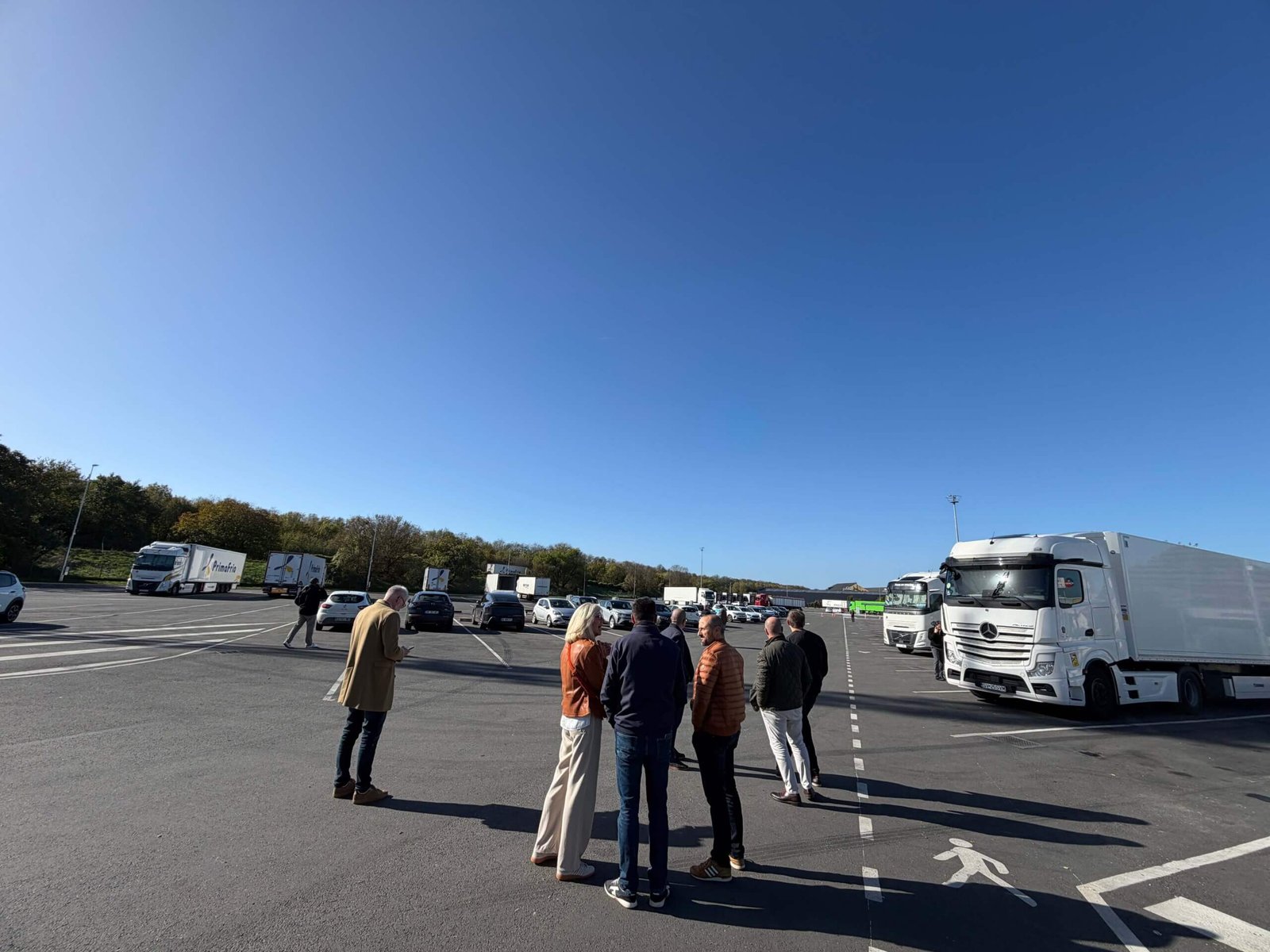
Drivers were at the centre of the Wellbeing Days. They were invited into the room to join the event, and the team then went out to the parking areas to meet drivers in their cabs, talk about a healthy lifestyle and listen to their concerns. At the Drivers’ Wellbeing Corner, drivers could take Wellbeing Check-Ups with a psychologist and a lifestyle coach, answer wellbeing surveys, join gentle sports sessions and enjoy hot drinks from Securit Park.
The message of the day was simple and shared: a human-centred wellbeing culture and environment, for people and places.
The Wellbeing Campaign and EWellIn
EWellIn, the European Wellbeing Initiative, powered by ESPORG, works towards one main objective: a human-centred wellbeing culture and environment in road transport, through inclusion. A culture for people, an environment for places. Free, voluntary and open to all, it brings the whole supply chain together around the professional driver: authorities and the European Commission, road transport associations, drivers’ families, haulage companies, parking operators and rest areas, shippers, industry stakeholders and partners.
The Wellbeing Campaign “Drive Safe, Park Safe, Work Safe, Live Well” was launched in March 2025 at the ESPORG Annual Conference, with the support of the European Commission. Over four years, from March 2025 to 2029, each year takes one more step along the driver’s journey.
- Year 1, Drive Safe: Road safety. Dedicated to drivers and their families.
- Year 2, Park Safe: Rest areas: a Home Away From Home. Dedicated to drivers at rest.
- Year 3, Work Safe: Workplaces. Dedicated to female truck drivers.
- Year 4, Live Well: Self-care. Dedicated to new generations.
Every Wellbeing Day has two parts, with drivers at the centre: roundtables and panels that bring the supply chain to one table, and Wellbeing Check-Ups close to the drivers.
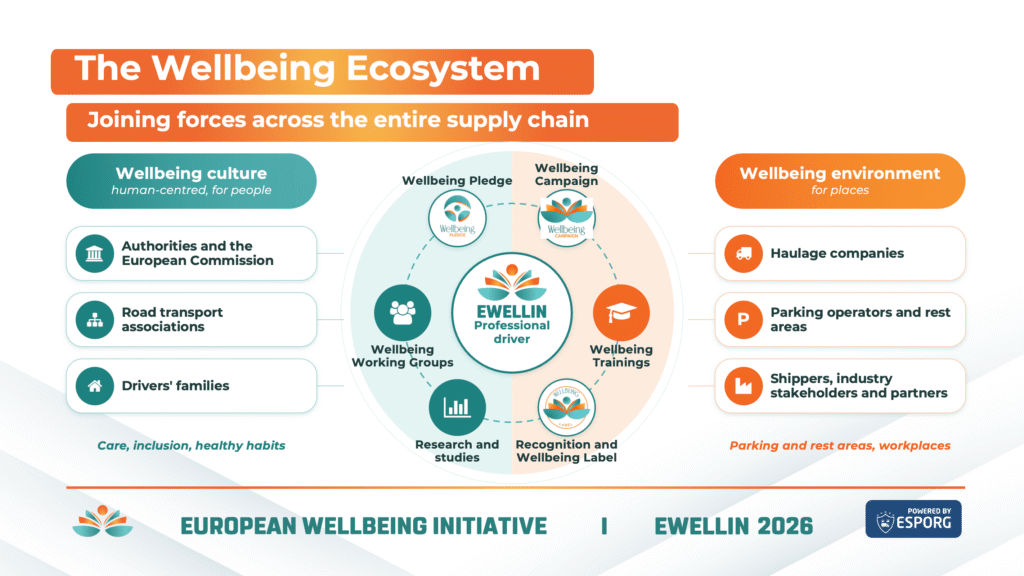
Six pillars that bring the supply chain together
- Research and studies: Good solutions start with listening: surveys, focus groups, driver interviews and Wellbeing Check-Ups.
- Wellbeing Pledge: A shared commitment to put driver wellbeing first, through awareness, education and investment. Free and voluntary, for individuals and organisations.
- Wellbeing Working Groups: From evidence to action: industry leaders create and implement solutions together.
- Wellbeing Campaign: Drive Safe, Park Safe, Work Safe, Live Well: wellbeing events at sites along the supply chain.
- Wellbeing Trainings: Prevention and healthy habits in every part of the supply chain, starting with parking operators.
- Recognition: Wellbeing Ambassadors, the Wellbeing Label and the Excellence in Truck Parking Award.
Wellbeing Ambassadors, the Wellbeing Pledge and the Wellbeing Standard
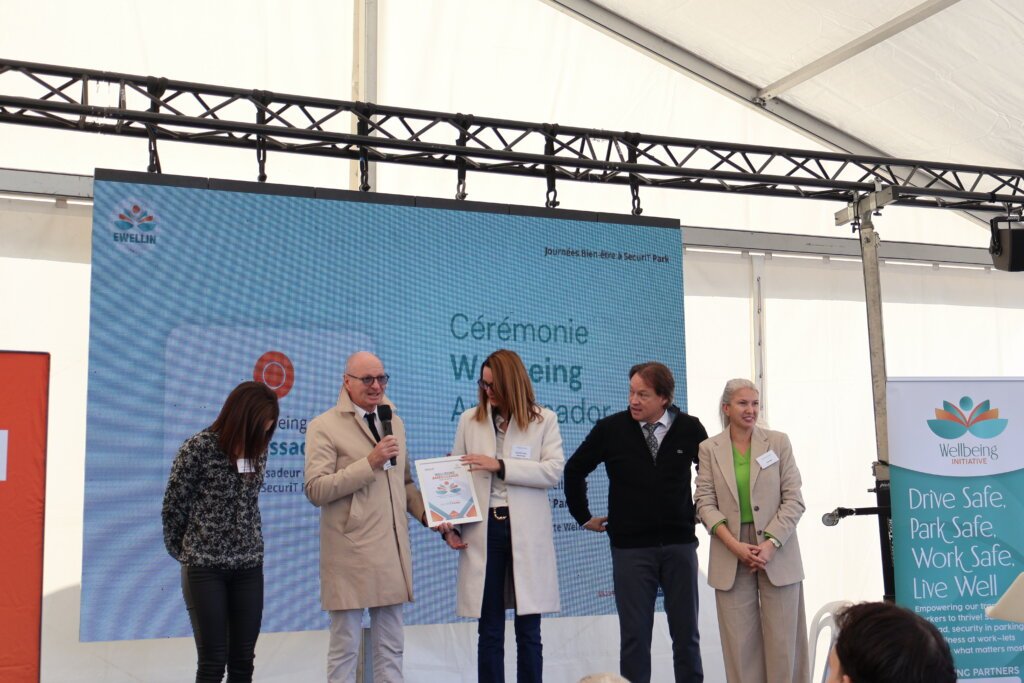
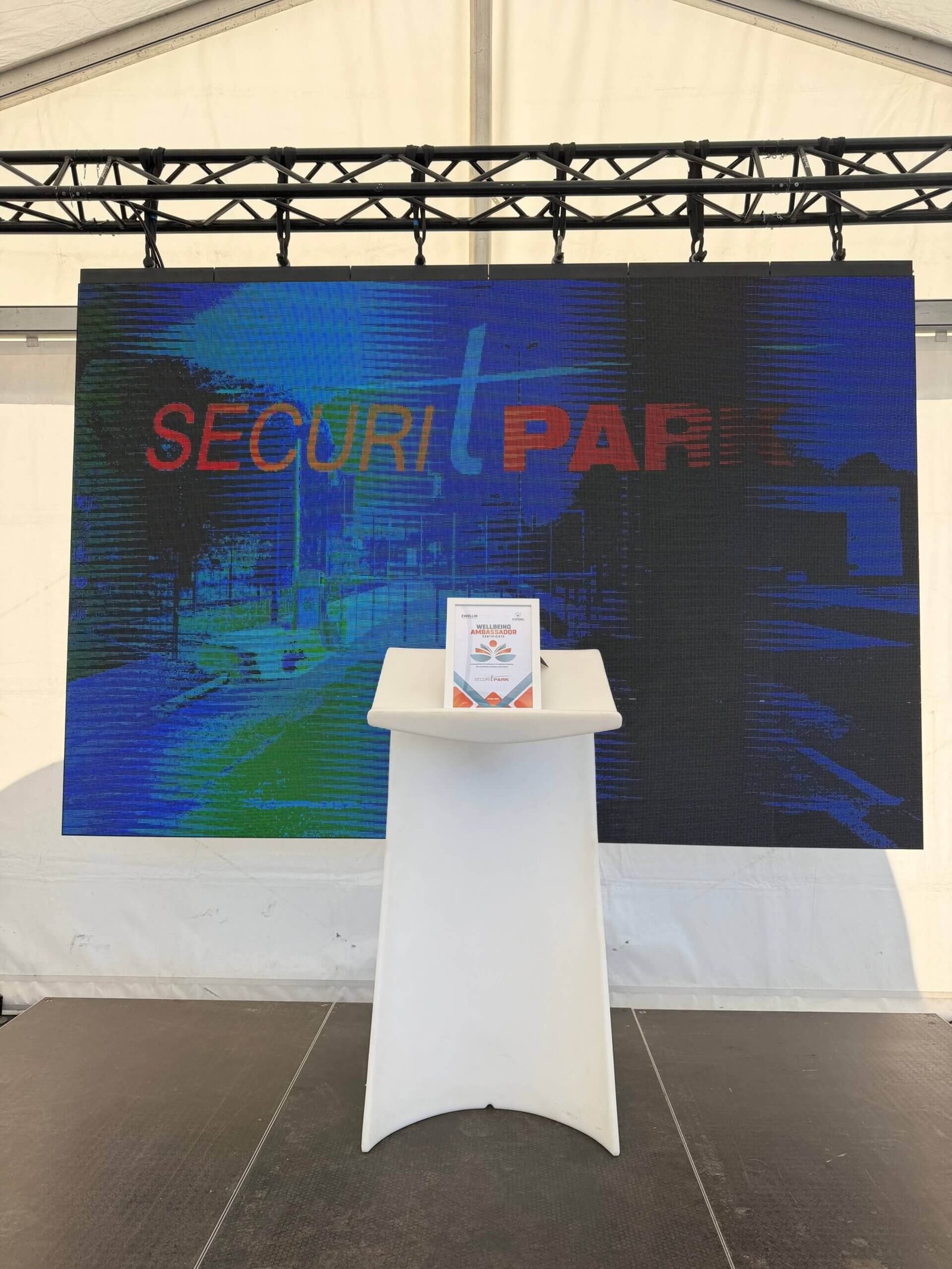
Every host of Wellbeing Days becomes a Wellbeing Ambassador, and in La Crèche Securit Park received its Wellbeing Ambassador certificate. Partners then signed the Wellbeing Pledge (wellbeingpledge.eu).
Looking ahead, the Wellbeing Standard is a voluntary standard for the physical and mental wellbeing of professional drivers, at the workplace and on the road. It offers one certification with two labels: the Workplace Wellbeing Label, for employers and organisations that prioritise the physical and mental health of their drivers, and the Wellbeing Zones Label, for rest areas, service stations and loading places that provide what drivers need for proper rest. Certification is carried out by an independent body accredited to ISO/IEC 17065, asks for at least 85% and every minimum requirement, and is valid for three years with surveillance.
WELLBEING HOST



Why it matters: the figures behind the day
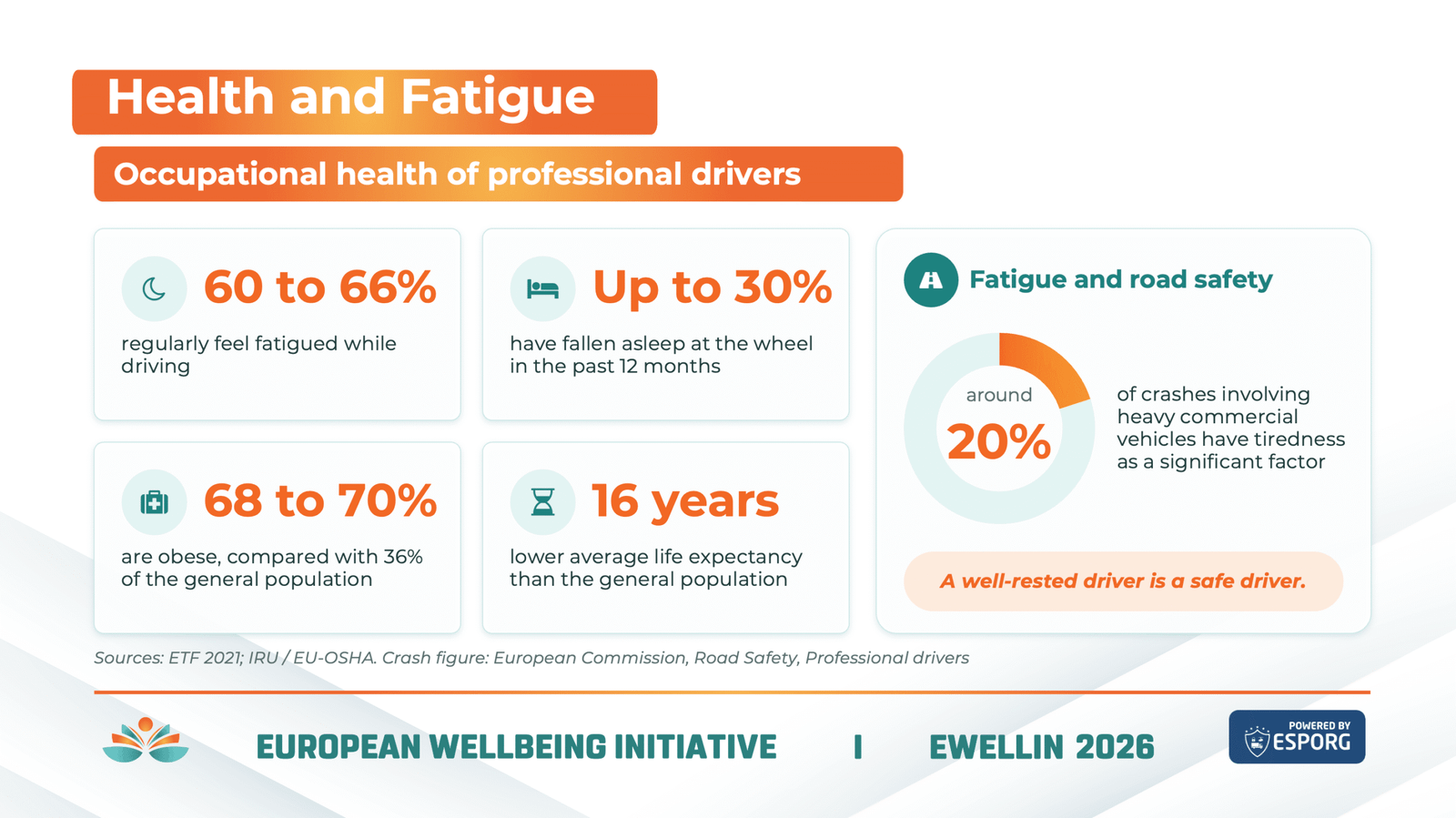
The figures below were shared through the Wellbeing Campaign and around the roundtable. Each one is a reminder that behind every number there is a driver looking for a safe place to rest.
ESPORG Study 2025: Insights on Truck Drivers’ Well-being (966 drivers: 922 from 22 EU countries and 44 from non-EU countries; 73 women; ages 22 to 65)
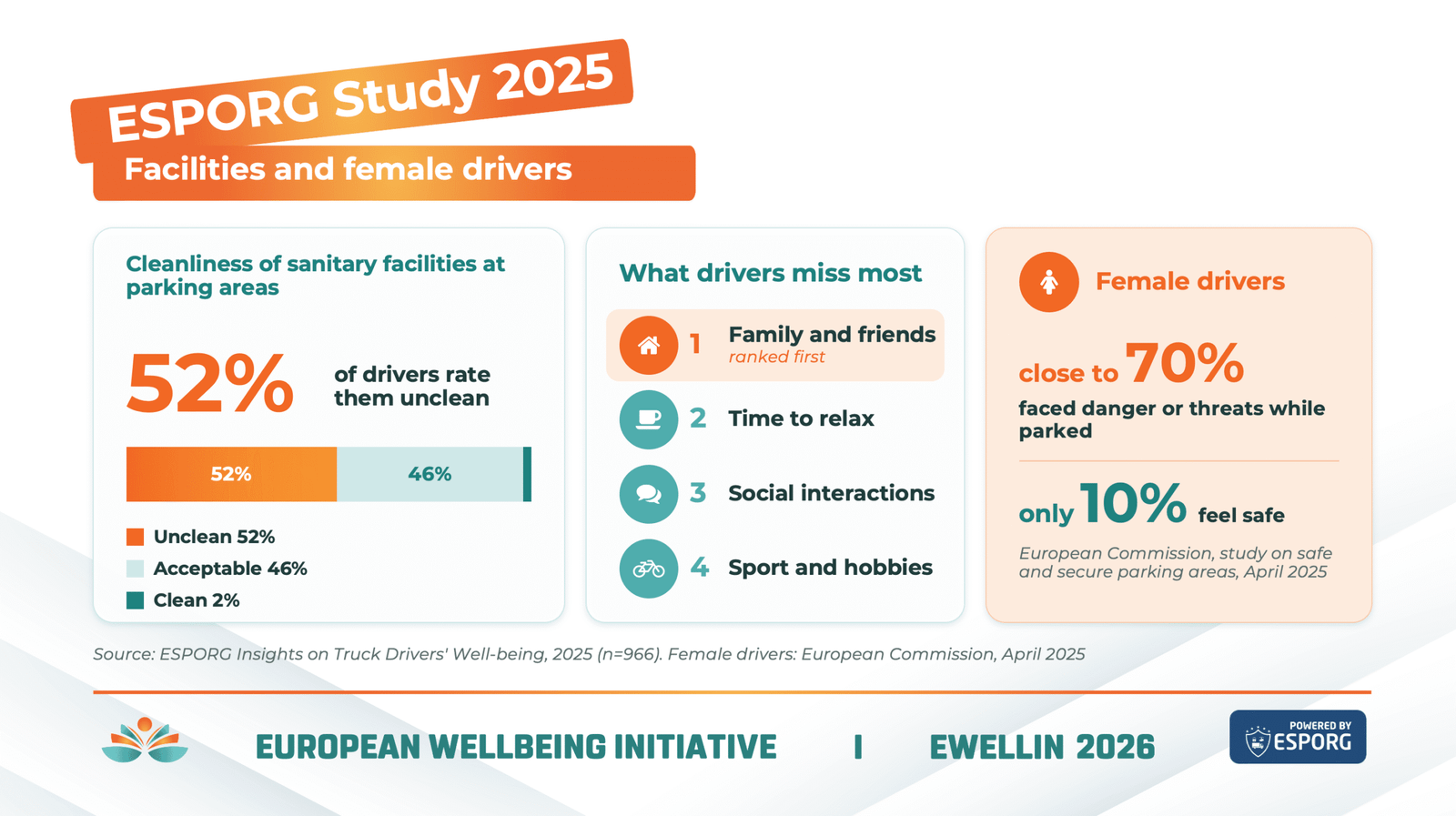
- 78% have faced safety concerns or dangerous situations while the vehicle is parked.
- Only 9% feel safe or very safe at European parking areas (8% safe, 1% very safe), while 55% feel unsafe or very unsafe.
- 52% rate sanitary facilities at parking areas as unclean; only 2% rate them clean.
- What drivers miss most: family and friends, then time to relax, social interactions, and sport and hobbies.
- A driver takes on average 2 hours to find a parking space, and 90% of drivers suffer from stress.
Female drivers: European Commission, study on safe and secure parking areas, April 2025
- Close to 70% have faced danger or threats while parked, and only 10% feel safe or very safe at parking areas in Europe.
Driver shortage: IRU, 2024
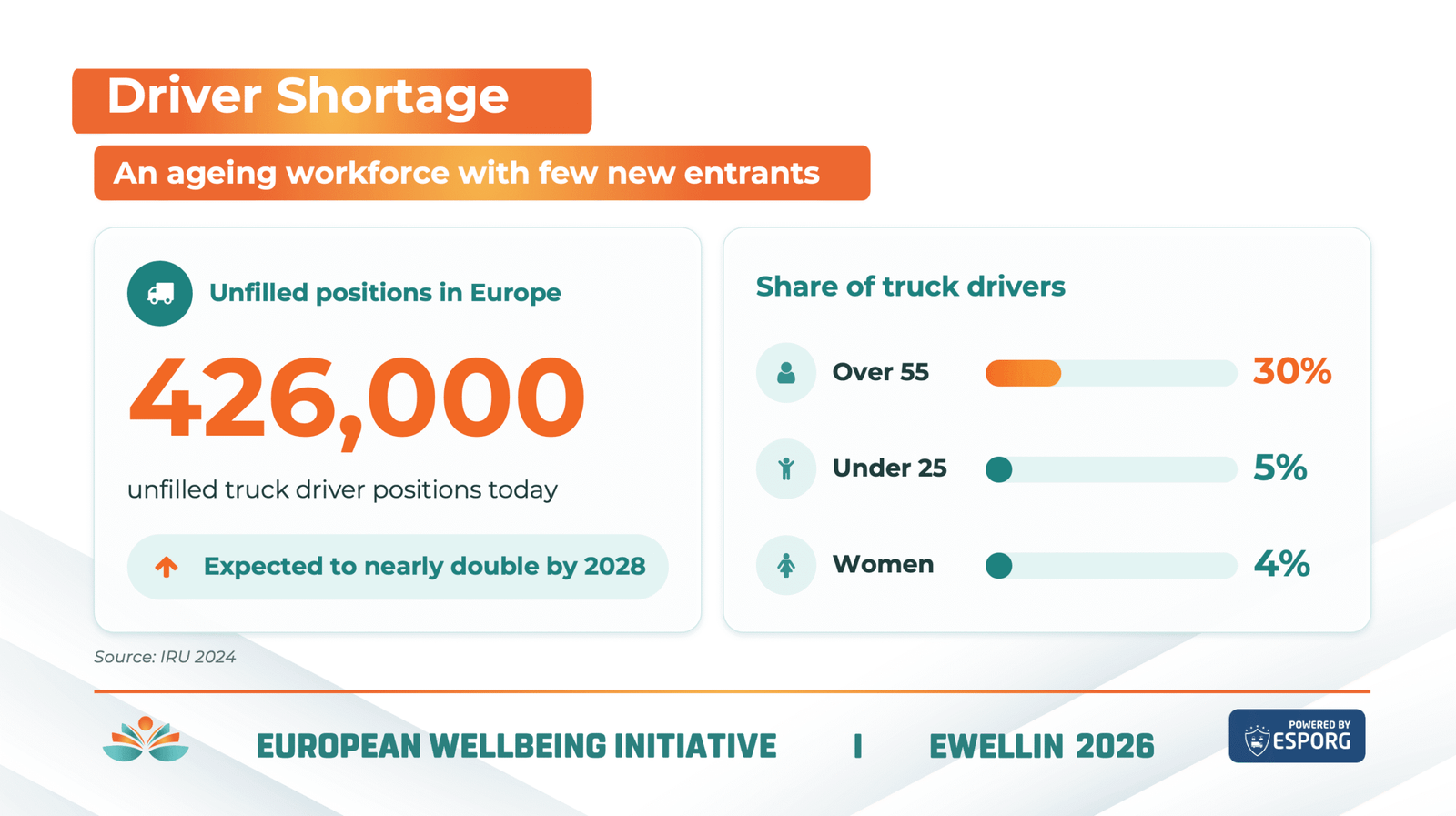
- 426,000 truck driver positions are unfilled in Europe, and the shortage is expected to nearly double by 2028.
- 30% of drivers are over 55, only 5% are under 25, and only 4% are women.
Safe and secure parking: European Commission study, 2025
- A current gap of 390,057 safe and secure parking spaces, equivalent to 3,250 parking areas, expected to grow to 483,000 spaces, or 4,025 certified parking areas, by 2040.
The presentations
Welcome speech: Virginie Stien, Managing Director, Trucks’nB & Securit Park
Virginie Stien opened the day and welcomed guests to Securit Park. Trucks’nB, founded in Lille in 2019 and known as the “Airbnb of secure truck parking”, helps drivers and fleets find, book and pay for secure truck parking, and Securit Park presents itself as the first secure parking area for trucks in the centre-west of France. Her welcome presented how a parking designed around the people who use it, with a guard on site around the clock, video surveillance, showers, a rest room, free coffee, free bikes and free laundry after a long stop, can turn a routine break into real time to recharge.
ESPORG: Dirk Penasse, General Manager, ESPORG
Dirk Penasse founded ESPORG, the European Safe and Secure Parking Organisation, in 2010, after setting up one of the first safe and secure truck parkings in Belgium. He presented how ESPORG brings together more than 120 safe and secure parking area members across Europe, develops standards, supports certification, promotes good practice and contributes to EU policy through research, so that truck parkings protect vehicles and cargo and care for the people who drive them. ESPORG also powers EWellIn, which brings wellbeing into the heart of the parking community.
European Wellbeing Initiative: Druselia Betea, Head of EWellIn, powered by ESPORG
Druselia Betea presented how EWellIn works towards one main objective: a human-centred wellbeing culture and environment in road transport, through inclusion. A culture for people, an environment for places. She introduced the six pillars of EWellIn: research and studies, the Wellbeing Pledge, the Wellbeing Working Groups, the Wellbeing Campaign, Wellbeing Trainings and the recognition of good practice. She placed the day within the four-year Wellbeing Campaign and its Year 2, Park Safe, and invited partners to take part, since EWellIn is free, voluntary and open to all.
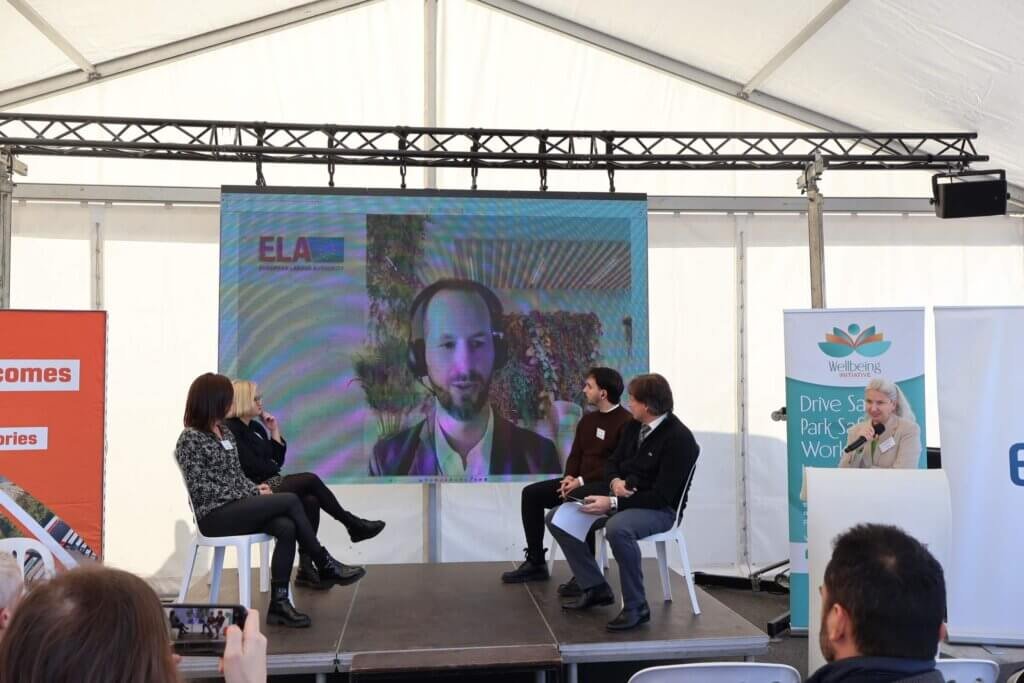
European Labour Authority (online): Ivan Mekinda, Seconded National Expert, ELA
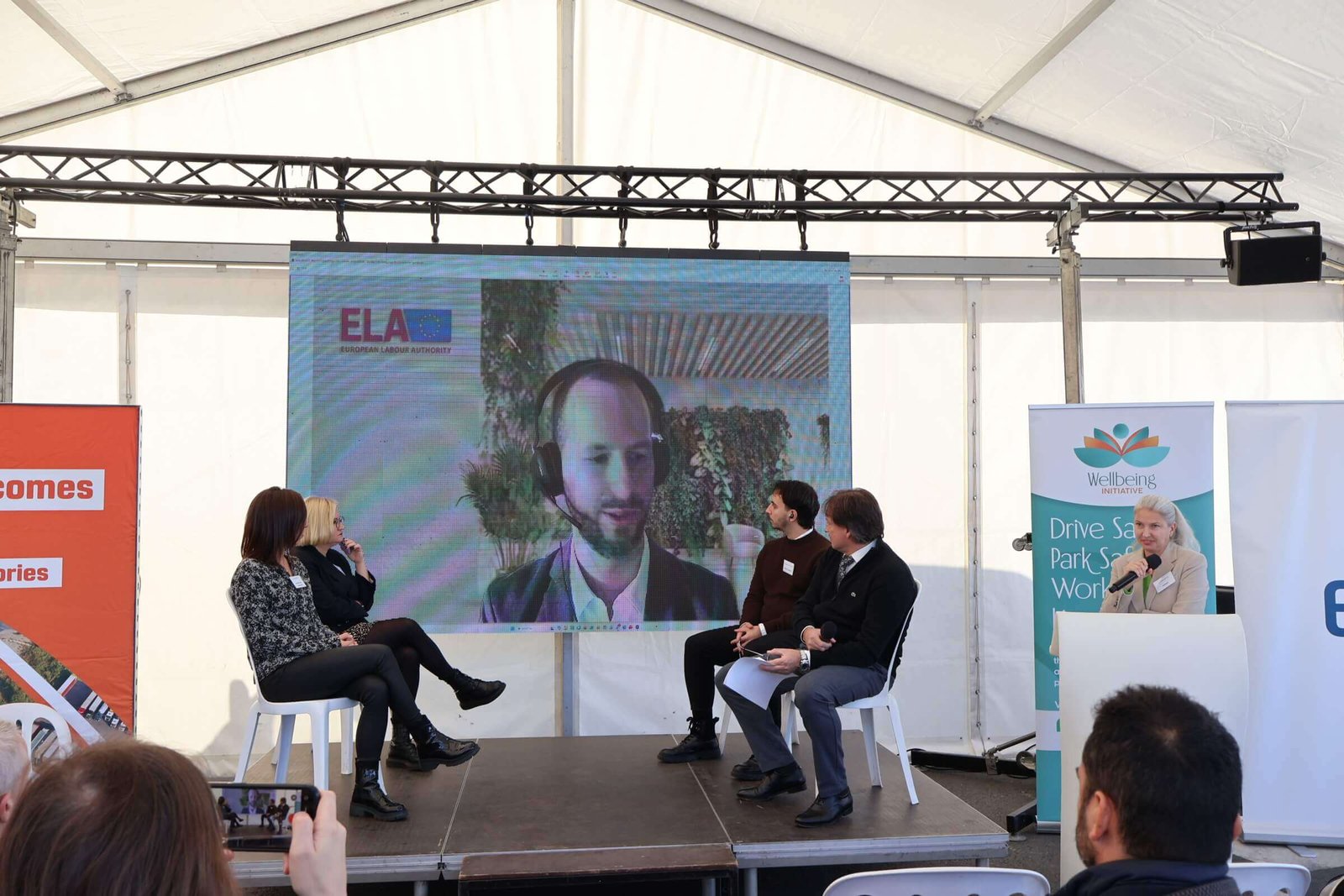
Joining online, Ivan Mekinda, Seconded National Expert in the Information and EURES Unit of the European Labour Authority in Bratislava, presented how ELA helps drivers and transport operators understand the EU rules that apply to them, such as driving and rest times and the changes brought by Mobility Package I. Through its #Road2FairTransport campaign, ELA shares leaflets in all EU languages and 11 more, online materials, information sessions and roadshows along some of the busiest motorways in the EU. ELA has already brought its roadshow to drivers at an ESPORG member parking in Belgium, where a permanent ELA Information Corner was launched. Clear information about working conditions under EU rules can help drivers plan their rest with more confidence.
Roundtable: Safe Roads, Safe Stops, Well Drivers
Joining forces for drivers’ wellbeing
Moderator: Druselia Betea, Head of EWellIn, powered by ESPORG
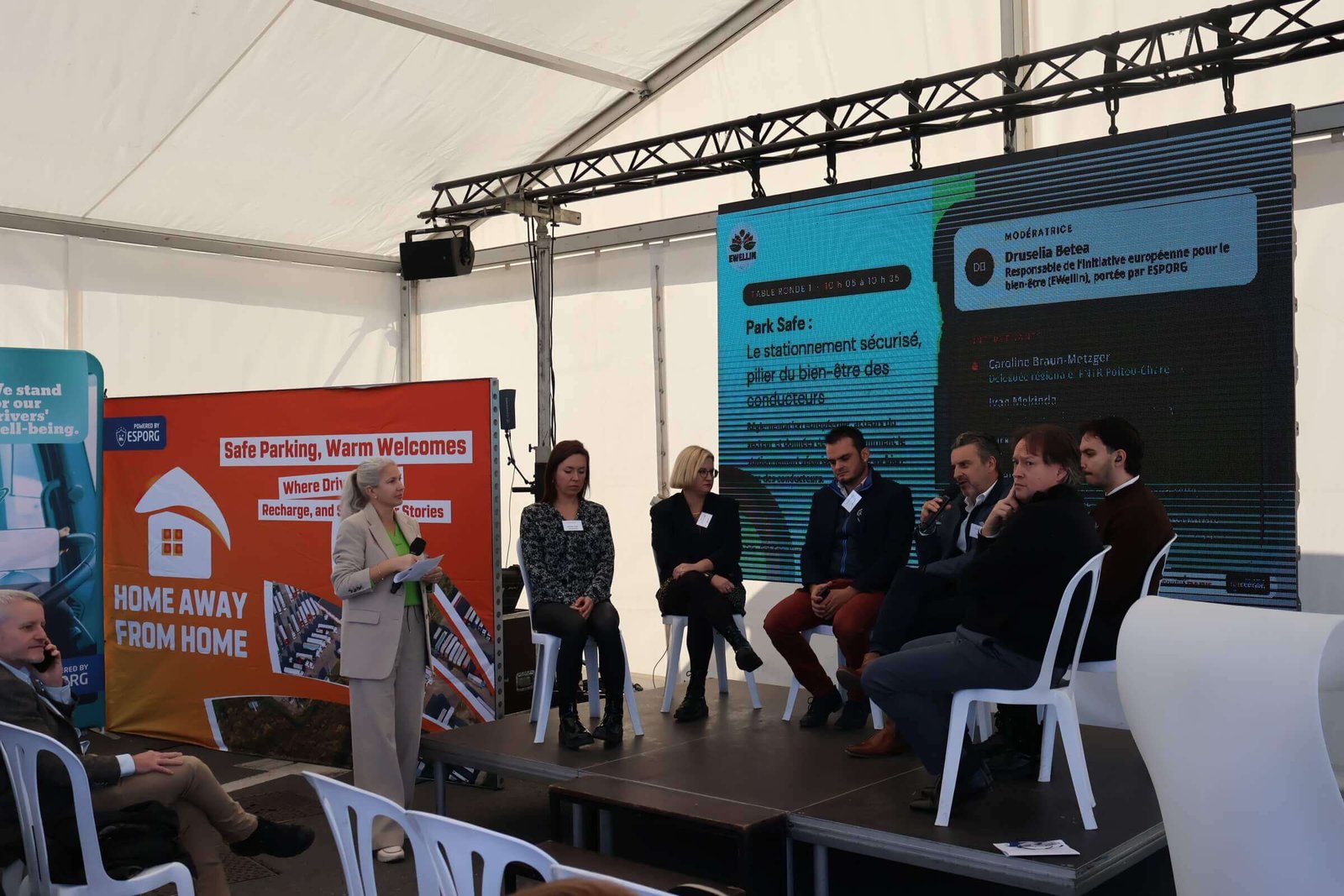
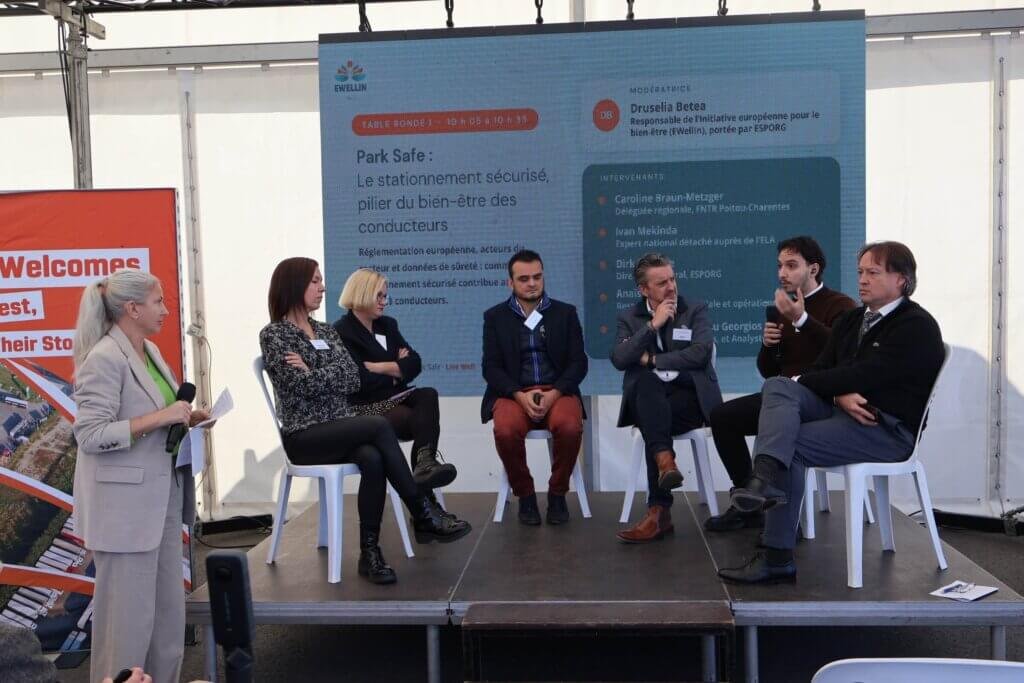
Moderated by Druselia Betea, Head of EWellIn, the roundtable was the heart of the morning and the clearest picture of what the Wellbeing Campaign is for: a bridge between actors who rarely sit at the same table. Each panellist sees the driver’s day from a different part of the supply chain: the haulier who plans the route, the parking community that sets the standards, the operator that welcomes the driver at night, the analyst who maps risk, the app that keeps drivers connected and the tolling specialist who makes the road simpler.
The conversation moved through the topics that shape a driver’s stop: the driver shortage, the lack of safe and secure parking spaces and the EU rules that address it, safety and security while parked, and the time and stress of finding a place to rest. Different roles, one common point: drivers’ wellbeing. The cards below show what each organisation does, the topic and figures each panellist brought to the table, and how their part of the chain can support drivers on the road and at the stop.
Caroline Braun-Metzger, Regional Delegate, FNTR Poitou-Charentes
Link in the supply chain: Haulage companies: where routes, rest stops and the working day are planned.
About FNTR Poitou-Charentes: The FNTR (Fédération Nationale des Transports Routiers) is France’s leading professional organisation for road haulage, with 5,643 member companies, 97% of them small and medium-sized. It works at local, national and European level, with a permanent office in Brussels. FNTR Poitou-Charentes serves Charente, Charente-Maritime, Deux-Sèvres and Vienne.
Topic at the table: The driver shortage. According to IRU (2024), 426,000 truck driver positions are unfilled in Europe, and the shortage is expected to nearly double by 2028. 30% of drivers are over 55, only 5% are under 25 and only 4% are women: a largely ageing workforce, with too few young people and women joining. Too few safe parking areas and facilities make the profession less attractive, and the European Commission notes that the shortage of safe and secure parking affects drivers’ safety and wellbeing and adds to the shortage of professional drivers. Caroline brought the view of the hauliers who live this every day in Poitou-Charentes.
What they bring to the table: The voice of the region’s haulage companies. Caroline represents member companies with local and regional partners and supports them on social, legal and training topics; FNTR Poitou-Charentes also sits on the road safety steering committee in Charente.
How FNTR Poitou-Charentes supports drivers’ wellbeing:
- The regional federation brings hauliers together, so good practice on rest and route planning can travel from one company to another.
- When companies can plan around secure stops, their drivers can rest with more peace of mind.
- Better stops can help make the profession more attractive to young people and women, and help companies keep their drivers.
Dirk Penasse, General Manager, ESPORG
Link in the supply chain: The European secure parking community.
About ESPORG: ESPORG, the European Safe and Secure Parking Organisation, was founded in 2010 and unites more than 120 safe and secure parking area members across Europe. It develops standards, supports certification, promotes good practice and contributes to EU policy through research, and in 2025 presented a study to the European Commission. EWellIn is powered by ESPORG.
Topic at the table: The lack of safe and secure parking spaces, and the EU rules. A European Commission study carried out with ESPORG estimates a current gap of 390,057 safe and secure parking spaces, equivalent to 3,250 parking areas, growing to 483,000 spaces or 4,025 certified safe and secure parking areas by 2040. EU rules point the way. Since the Mobility Package, drivers cannot take their regular weekly rest in the vehicle. The TEN-T Regulation (EU) 2024/1679 asks Member States to develop certified safe and secure parking areas along the core and extended core network by 31 December 2040, with an average maximum distance of 150 km between two of them. Delegated Regulation (EU) 2022/1012 sets the EU standard for safe and secure parking areas, with four security levels (bronze, silver, gold and platinum) and minimum services such as separate toilets and showers for women and men, food and drinks around the clock and free internet. ESPORG worked with IRU on the study that led to the EU Parking Standard, and today it develops standards and supports certification.
What they bring to the table: Almost twenty years of experience since he set up one of the first safe and secure truck parkings in Belgium, and a view of the whole European parking network.
How ESPORG supports drivers’ wellbeing:
- Standards and certification help drivers recognise a parking where they can rest safely.
- A European network of secure parkings helps drivers find a safe place to stop along their route.
- By powering EWellIn, ESPORG helps bring wellbeing, not only security, into the way parkings are designed and run.
Anaïs Bulot, Sales & Operations Manager, Trucks’nB
Link in the supply chain: The parking operator and booking platform: where the driver’s day pauses.
About Trucks’nB: Trucks’nB, founded in Lille in 2019, offers reservation and payment services for secure truck parking and develops a Freeflow system that helps operators run their sites. It operates Securit Park, and it was among the first signatories of the Wellbeing Pledge.
Topic at the table: Welcoming the driver at the stop. Anaïs brought the view of the operator who welcomes drivers at night. With only 9% of drivers feeling safe or very safe at European parking areas (ESPORG Study 2025), a secure, welcoming stop with easy booking and Freeflow access can make a real difference to a driver’s rest.
What they bring to the table: Daily contact with drivers and customers, so she hears first hand what makes a stop work well. In a 2026 interview at the ESPORG conference she said of Trucks’nB: “We aim to make the work life and overall life of drivers better every day.”
How Trucks’nB supports drivers’ wellbeing:
- Secure parking helps reduce stress and can improve sleep, because drivers know their truck and cargo are watched while they rest.
- Booking ahead means a driver knows where the day will end, can shorten the search for a place, and Freeflow access means no ticket and no waiting at the gate after a long drive.
- Comforts at Securit Park, such as showers, a rest room with TV, free coffee, free bikes and free laundry after 10 hours, help drivers recharge body and mind.
Sylvain Giraud, Head of Tolling Products, Axxès
Link in the supply chain: Road services along the whole journey.
About Axxès: Axxès, based in Lyon, has specialised in European electronic toll payment since 2005: one toll box for Europe, with a single invoice. It also offers services for transport companies, such as fleet tracking, driver and tachograph data, booking of secure truck parks with Trucks’nB paid with the Axxès toll box, and quick online passes for the Fréjus and Mont Blanc tunnels.
Topic at the table: Road services along the whole journey. Tolls, payments and passes are part of every journey. When they are simple, and when secure parking can be booked and paid with the same toll box, drivers and planners spend less time on admin and on searching for a place to rest.
What they bring to the table: Years of experience in international tolling and digital projects, and the view of the whole journey, beyond the parking. In 2025 he said that with neighbouring countries connected, “drivers can focus solely on the road”.
How Axxès supports drivers’ wellbeing:
- One toll box and a single invoice across countries means less admin and fewer payment worries for companies and drivers.
- Paying for secure parking with the toll box links the road and the rest stop, so a safe place to stop is easier to book.
- Tunnel passes ordered in seconds help planners prepare the journey, so drivers set off with what they need.
Meeting the drivers
Wellbeing starts with listening. Throughout the Wellbeing Days, the EWellIn team made sure that drivers were not only the subject of the conversation, but part of it.
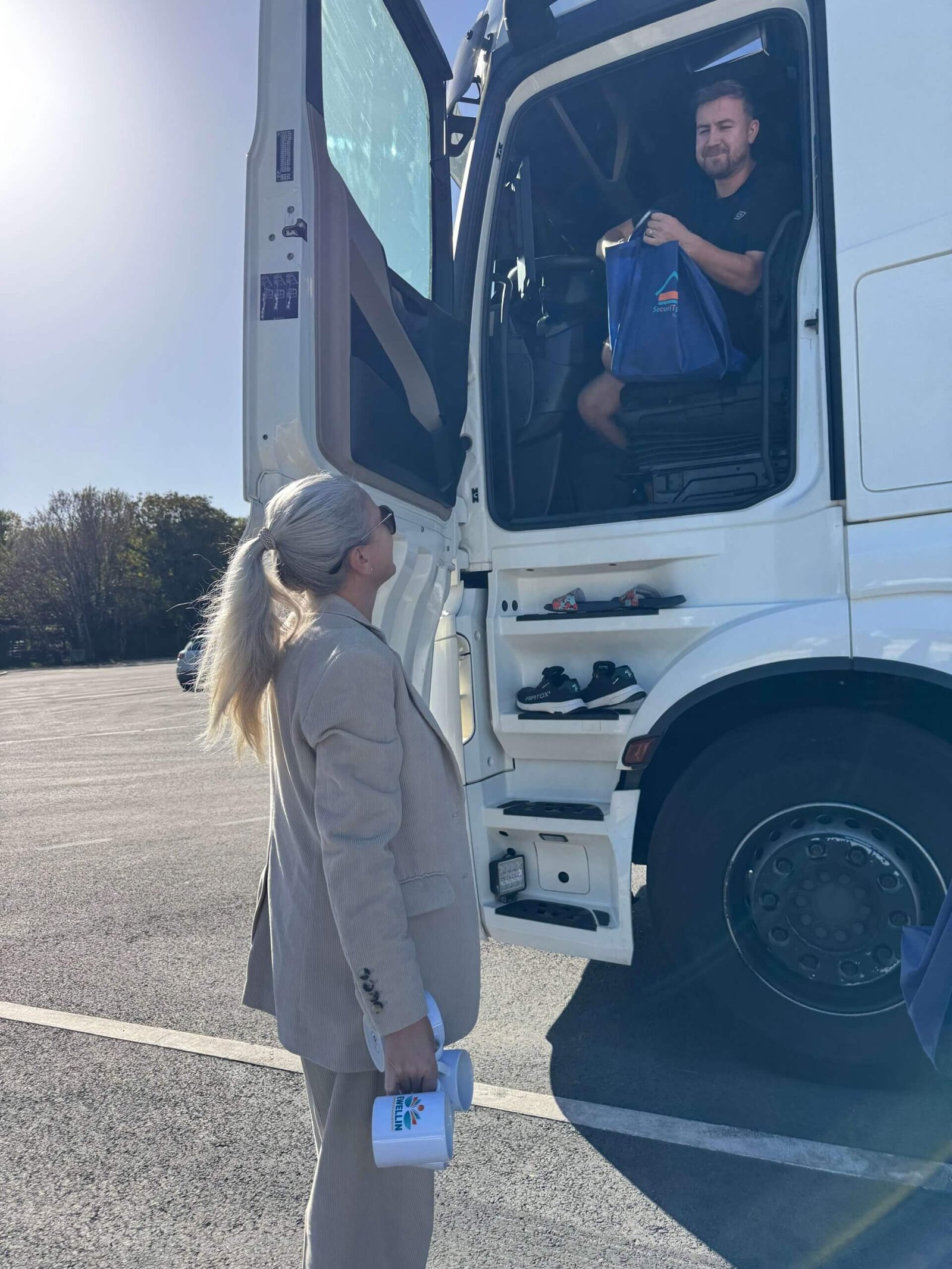
Drivers stopping at Securit Park were warmly invited into the room to join the event, to hear the speeches and the roundtable, and to share their own view. Not every driver feels comfortable walking into a room full of guests, so the team also went out to the parking areas to visit the shyer drivers in their cabs. There, in their own space and at their own pace, we talked together about a healthy lifestyle on the road: physical activity, nutrition, sleep, hydration and stress relief. Above all, we listened to their concerns.
These conversations continued at the Drivers’ Wellbeing Corner, run with the EWellIn Wellbeing Volunteers: Druselia Betea, Joric Bossu, Mirjam Frakulla and Marc Van Grootel. What drivers shared flows into the Wellbeing Working Groups, so that listening can turn into action.
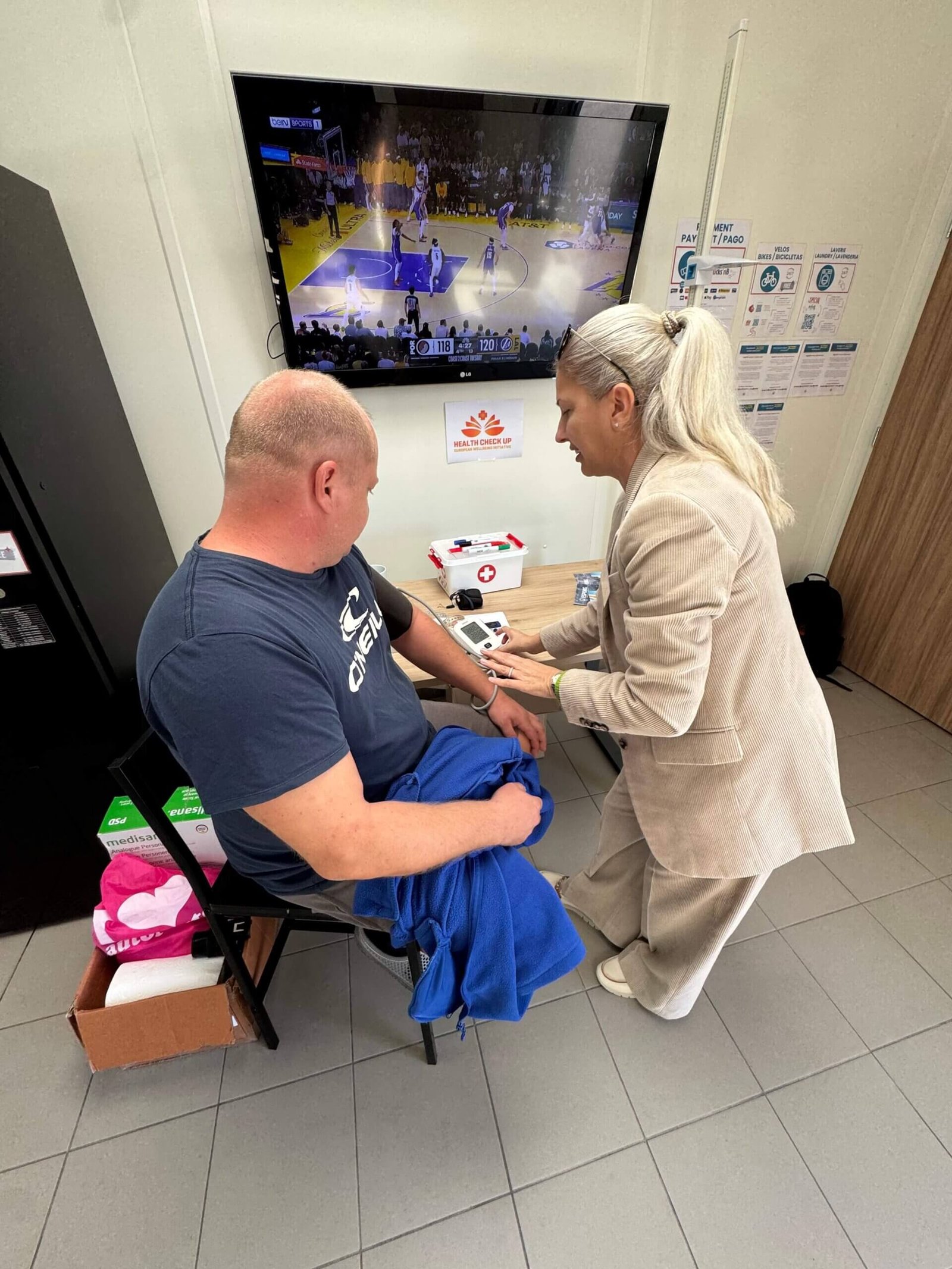
A Wellbeing Check-Up is a voluntary and confidential moment of awareness and prevention, taking about 20 to 35 minutes. It looks at weight, height and BMI, waist circumference, blood pressure and oxygen saturation, together with daily habits such as nutrition, hydration, sleep, activity and stress. Trained volunteers carry it out, with a psychologist and a health coach on site, and the data is only used in aggregate.
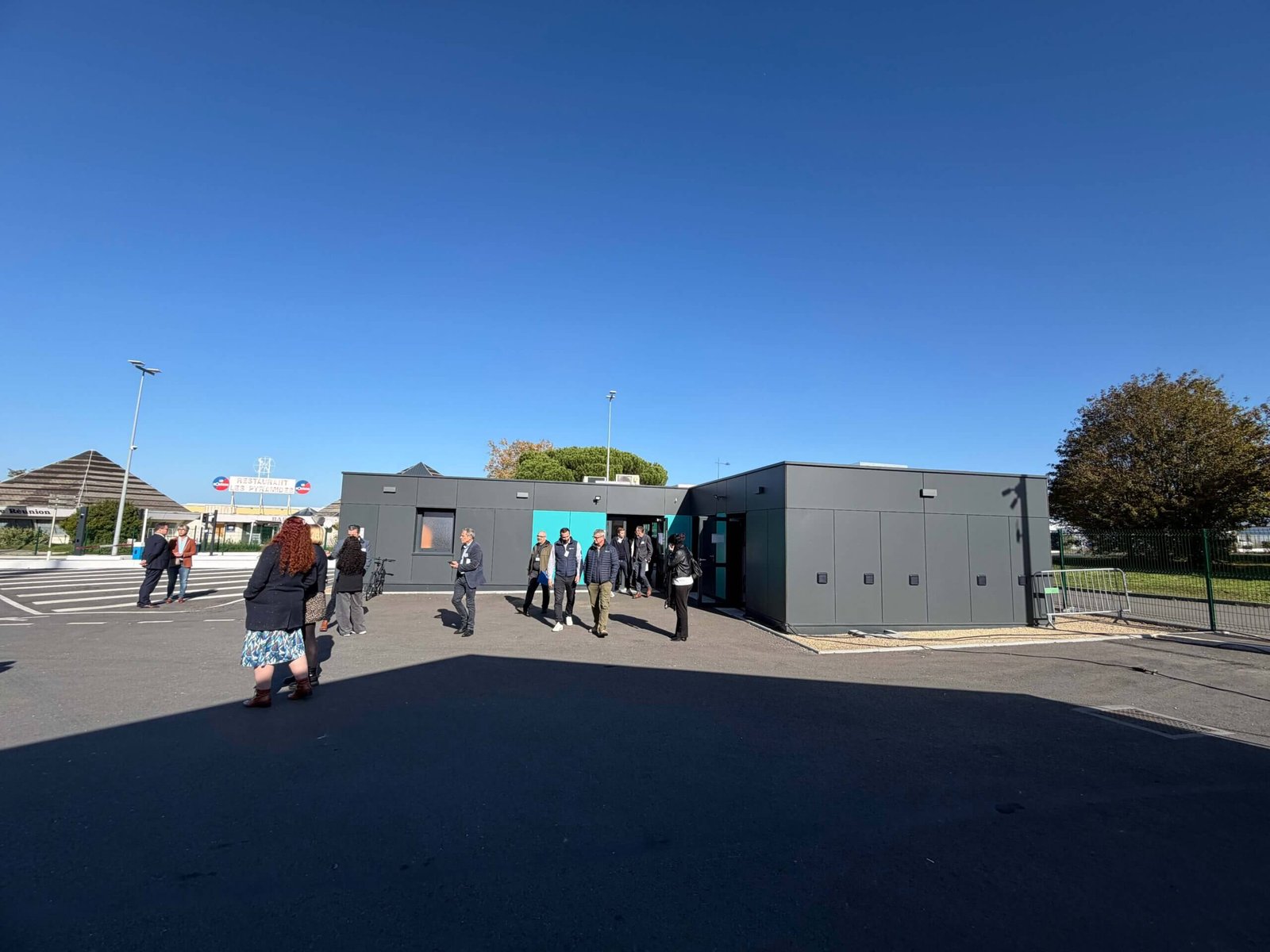
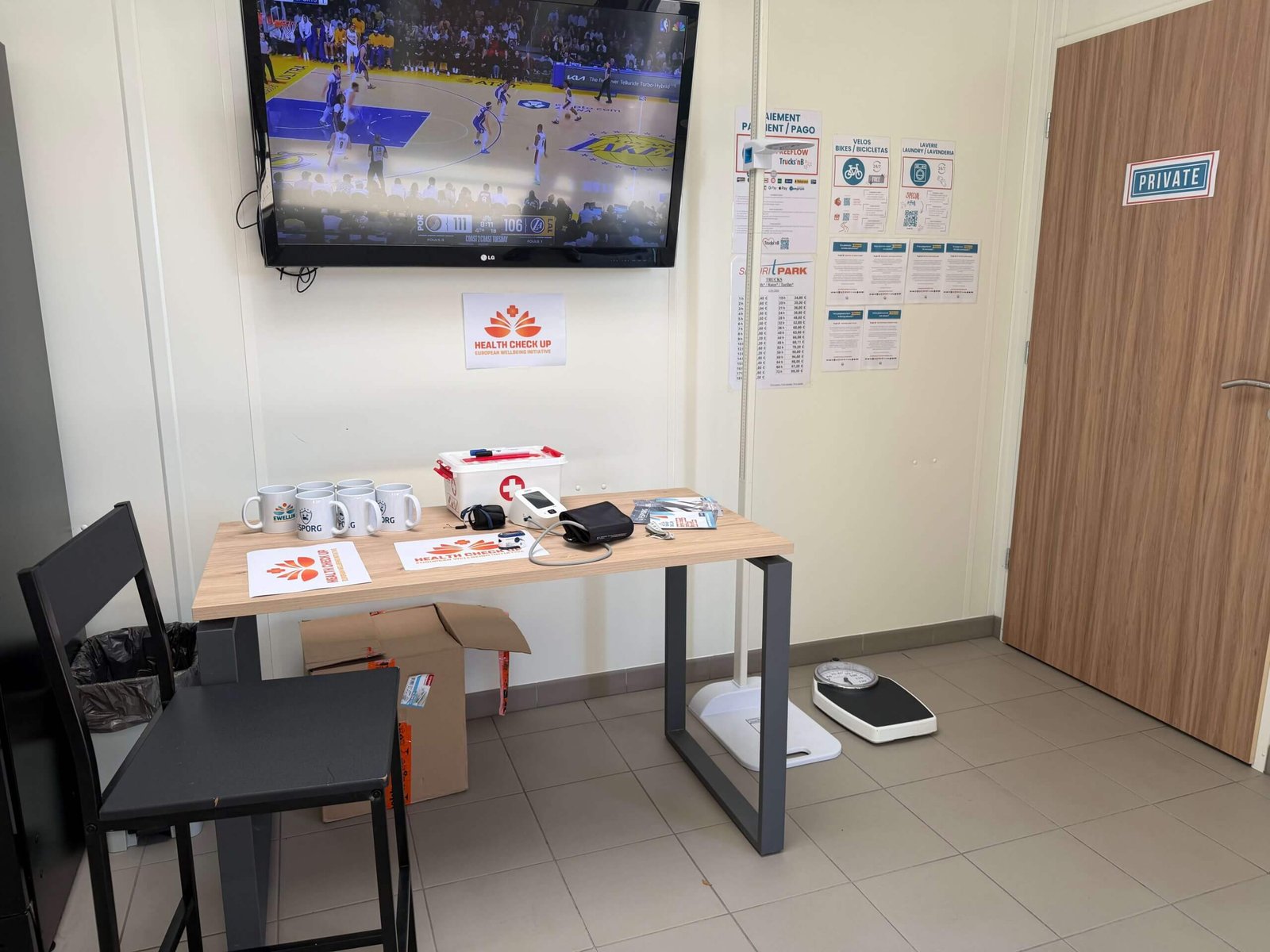
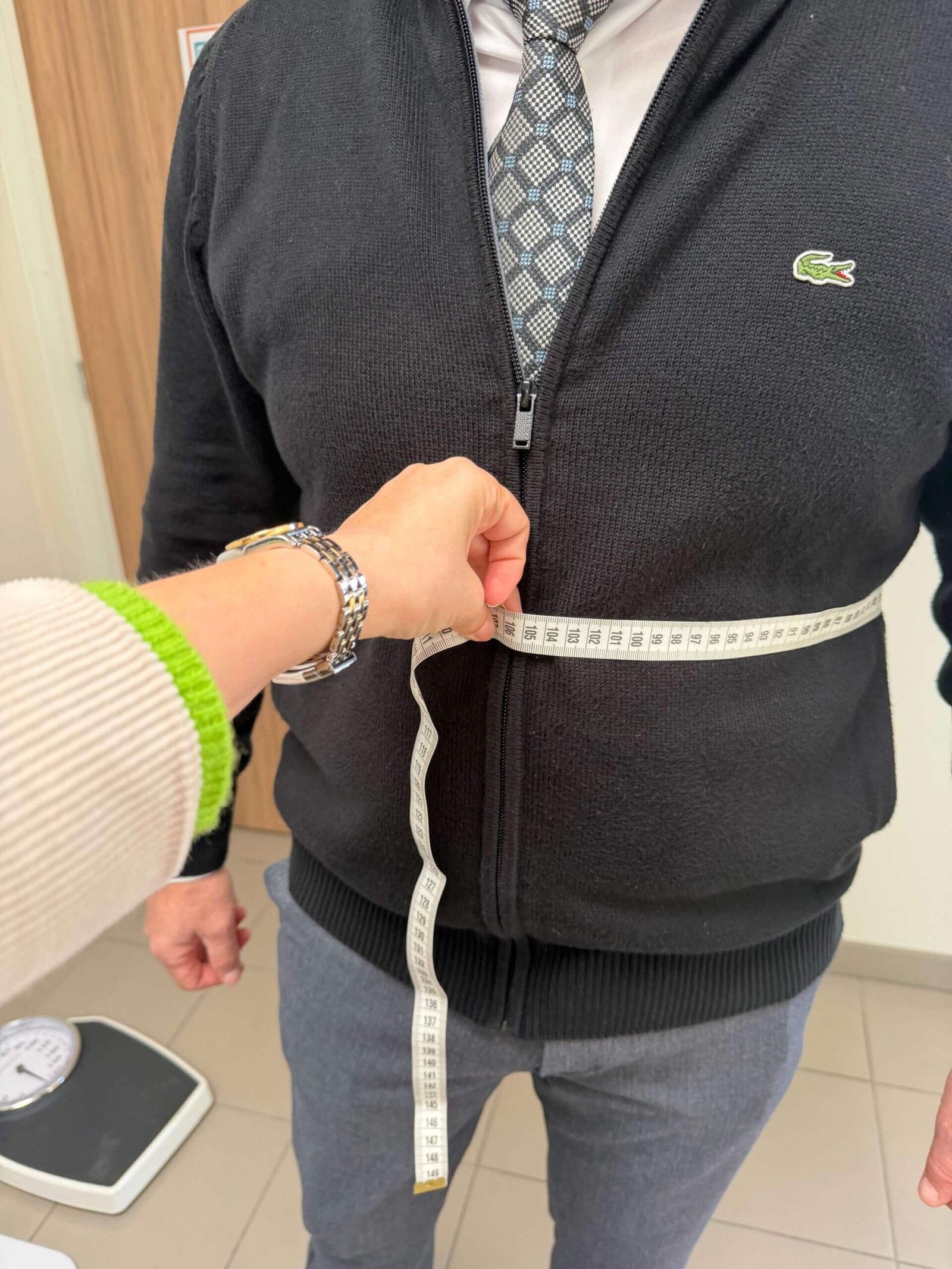
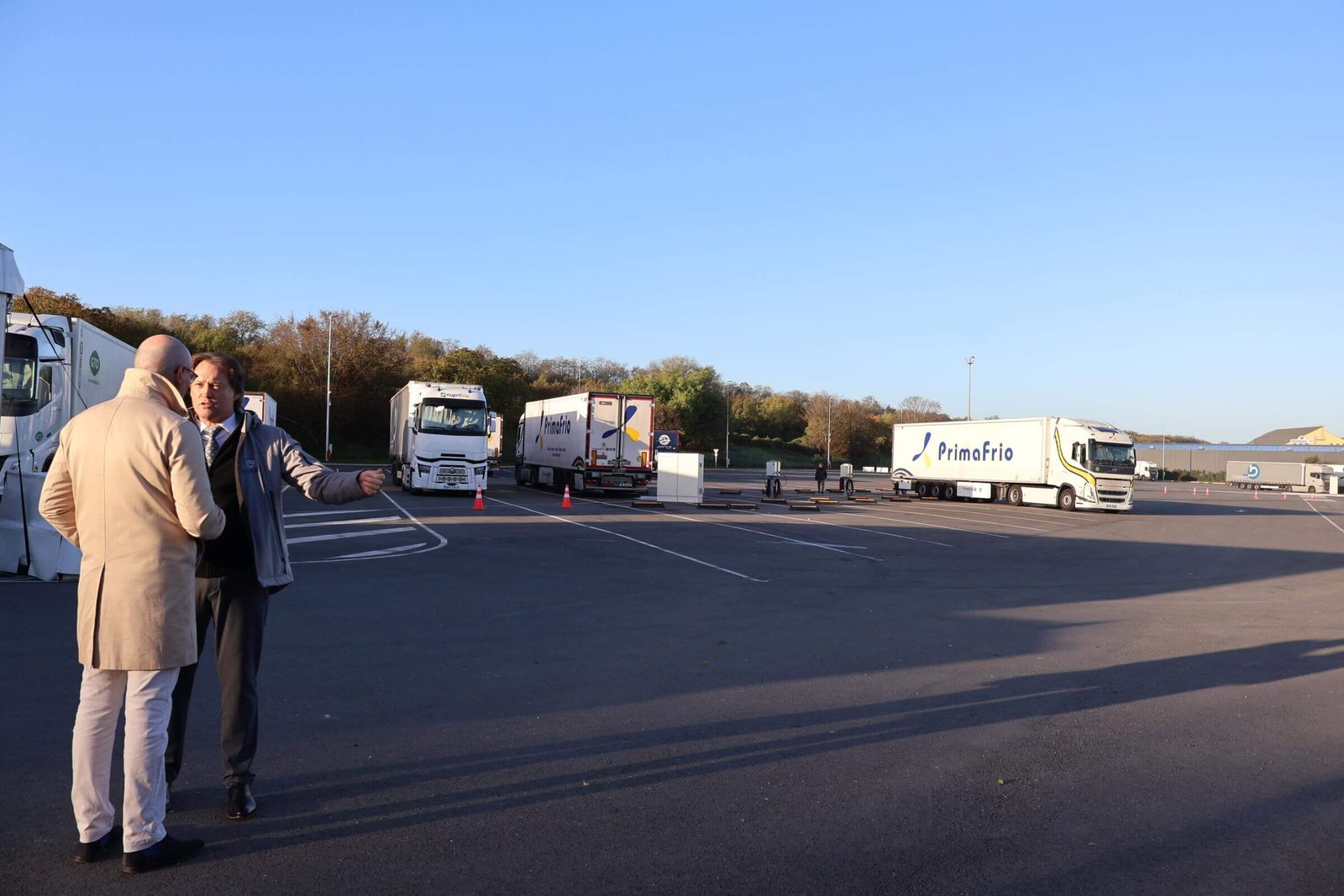
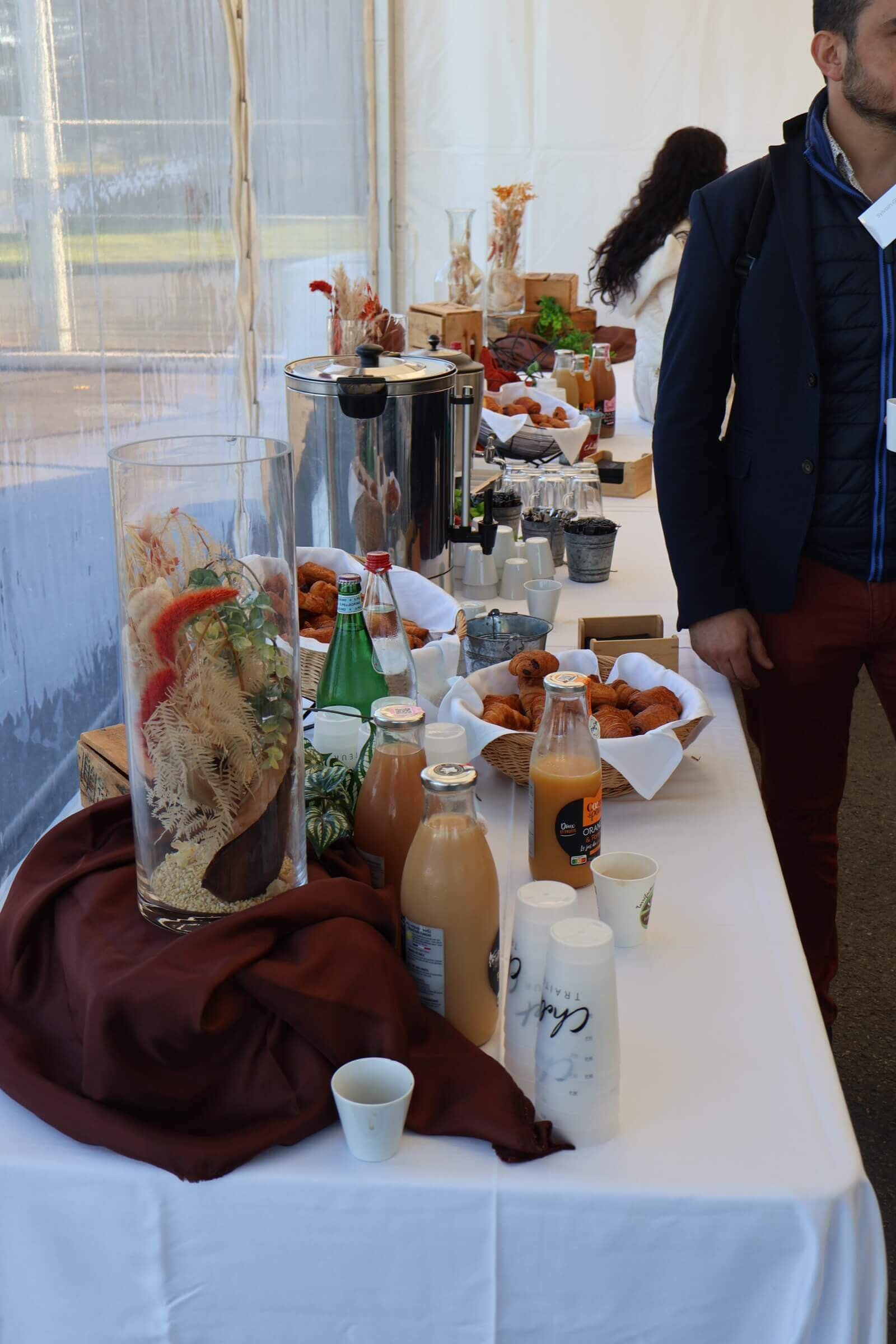
The Drivers’ Wellbeing Corner
- Wellbeing Check-Ups (Tue 27 Oct, 16:30 to 19:30; Wed 28 Oct, 13:30 to 16:00): With Druselia Betea, psychologist and health coach. A moment to pause, reflect on daily habits and talk about prevention.
- Wellbeing surveys (Tue 27 Oct, 16:30 to 19:30; Wed 28 Oct, 10:00 to 16:00): With Mirjam Frakulla and Marc Van Grootel, Wellbeing Task Force. Drivers could share what helps them feel well during a stop.
- Sports activities (Wed 28 Oct, 3 sessions of 20 minutes): With Joric Bossu, adapted physical activity teacher: 14:00 seated cardio, 14:40 low-impact cardio, 15:20 back and mobility.
- Hot drinks and goodies (All year, and Wed 28 Oct): With Securit Park, our host: free hot drinks and soup all year, with cakes and goodies on 28 October.
Common thread: joining forces for a wellbeing ecosystem
From the regional haulier to the European parking community, from the security analyst to the app developer and the tolling specialist, each actor in La Crèche holds one piece of the driver’s day. None of them can create wellbeing alone. Together, they can build a wellbeing ecosystem around the driver.
Behind every figure heard in La Crèche, from 426,000 unfilled positions to the 4,025 safe and secure parking areas Europe will need by 2040, there is a driver looking for a safe place to rest. That is the purpose of the Wellbeing Campaign: to build bridges, to open a communication platform, and to bring the supply chain to the same table so that it can find its common point, drivers’ wellbeing. What drivers shared at the Drivers’ Wellbeing Corner now flows into the Wellbeing Working Groups, where listening turns into action. Securit Park, now a Wellbeing Ambassador, and the partners who signed the Wellbeing Pledge carry this spirit forward, on the road towards Year 3, Work Safe.
A human-centred wellbeing culture and environment, for people and places: one stop, one conversation and one partnership at a time.
Contact
Druselia Betea, Head of EWellIn, European Wellbeing Initiative, powered by ESPORG
d.betea@esporg.eu
SOURCES
- Wellbeing Days agenda and moderator script: EWellIn, 28 October 2026
- EWellIn presentation decks (objective, pillars, Campaign, Wellbeing Standard, ESPORG Study 2025 figures): EWellIn, 2025 to 2026
- ESPORG Study 2025, Insights on Truck Drivers’ Well-being (n=966): ESPORG; summary at https://esporg.eu/2025/09/10/esporg-strengthens-dialogue-with-european-commission-on-drivers-wellbeing/
- European Commission study on safe and secure parking areas, 2025 (gap to 2040; female drivers, Annex II): https://www.europarl.europa.eu/meetdocs/2024_2029/plmrep/COMMITTEES/TRAN/DV/2025/06-24/Final-Report-SSPAs_MOVEC1SER2023-138_EN.pdf ; https://data.europa.eu/doi/10.2832/2325866
- Report from the Commission on safe and secure parking areas, 2025: https://transport.ec.europa.eu/news-events/news/commission-calls-action-increase-safe-and-secure-parking-areas-professional-drivers-2025-12-03_en
- IRU driver shortage figures: https://www.iru.org/news-resources/newsroom/insights-ground-ai-and-leading-trends-trucking ; https://www.iru.org/news-resources/newsroom/worse-you-thought-truck-driver-shortages-and-demographics
- TEN-T Regulation (EU) 2024/1679: https://eur-lex.europa.eu/legal-content/EN/TXT/?uri=CELEX%3A32024R1679
- Delegated Regulation (EU) 2022/1012, EU standard for safe and secure parking areas: https://eur-lex.europa.eu/eli/reg_del/2022/1012/oj/eng
- ELA, #Road2FairTransport and driving and rest time rules: https://www.ela.europa.eu/en/campaigns/road-fair-transport
- Securit Park and Trucks’nB: https://www.securitpark.fr/en ; https://esporg.eu/2026/05/28/trucksnb-the-airbnb-of-secure-truck-parking/
- ESPORG: https://esporg.eu/about/ ; https://esporg.eu/2026/07/29/ecg-interviews-esporg-building-safe-hubs-for-europes-drivers/
- FNTR: https://www.trm24.fr/representativite-patronale-dans-le-trm-la-fntr-conserve-son-leadership-lotre-accelere/
- Risk Intelligence and LandRisk: https://www.riskintelligence.eu/landrisk-logistics ; https://www.riskintelligence.eu/analyst-briefings/the-missing-link-in-military-mobility-europes-secure-parking-challenge
- Seebee: https://seebee.com/en/our-solutions/
- Axxès: https://axxes.eu/en/axxes-about-us/ ; https://axxes.eu/en/services-for-transporters/secure-truck-parks/